

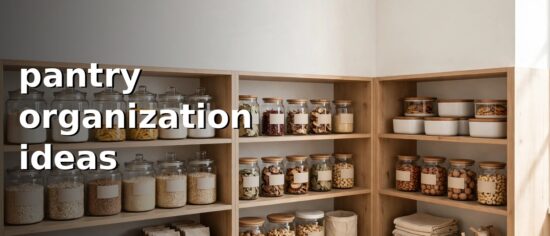
Pantry Organization Ideas That Make Everyday Cooking Easier
Pantry organization ideas work best when you group foods by how you cook, place daily items at eye level, and store older stock in front so it gets used first. Clear, labeled containers, shelf risers, and a short weekly reset keep the system visible, safe, and easy to maintain.
Key Takeaways
- Group food by use — breakfast, baking, dinner staples, and snacks — rather than by package shape or brand.
- Put older items in front and newer items behind them so stock rotates naturally and less food is forgotten.
- Keep shelf-stable food in a cool, dry place away from heat, damp areas, and direct sunlight.
- Decant only dry staples you use often, and always keep the food name and date information with the container.
- A system that fits your shelf depth and cooking habits will last longer than matching containers alone.
How Should You Start Organizing a Pantry?
Start by taking everything out, one shelf at a time, so you can see what you actually own. Hidden duplicates and forgotten items are the main reasons a pantry feels crowded.
Check each package as you sort it. Discard cans that are bulging, leaking, rusted, or deeply dented along a seam, and discard food with mold, an off smell, or damaged packaging. Wipe shelves with mild soapy water and let them dry fully before restocking.
Then sort what remains into broad groups, such as breakfast foods, baking supplies, canned goods, grains and pasta, snacks, sauces, and spices. Finally, measure shelf height, depth, and width before buying anything.
What Is the Best Way to Group Foods in a Pantry?
Group by meal or task, not just by food type. A breakfast group might hold cereal, oats, coffee or tea, and spreads together, while a dinner group might hold pasta, canned tomatoes, broth, and cooking oil. When ingredients for a common meal live together, you search less and buy fewer duplicates.
Place groups by frequency of use: daily items at eye level and near the front, weekly items one step away, and backup stock on high shelves or in a separate overflow spot. Keep heavy items low. Put children’s snacks on a low shelf only if they are safe for children to handle alone; cleaning products and medicines should be stored separately from food.
A small “use first” area makes rotation visible. Place open foods and items near their printed date in one front-facing spot, and check it before shopping. For how a tidy pantry fits the wider room, see these decor tips decoradhouse.
Which Containers and Tools Are Worth Using?
Choose tools that solve a specific problem: visibility, access, or protection from moisture and pests. Clear, airtight containers suit loose dry goods such as flour, sugar, rice, oats, and cereal because you can see how much remains. Square or rectangular containers usually use shelf space better than round ones. Open bins suit packaged snacks and pouches that would otherwise slide around.
For deep shelves, a pull-out bin, tiered riser, or turntable brings back-row items into reach. A riser suits cans and small jars, while a turntable suits oils and sauces in a corner. Door racks can hold spices, but check the weight limit and door clearance.
You do not need to decant everything. Original boxes often stack well, and transferring food risks losing allergy information or date details. Decant only staples you use often, using food-safe containers with tight lids, labeled with the food name and transfer date.
| Tool | Best use | Main limitation |
|---|---|---|
| Clear airtight canister | Flour, sugar, rice, oats | Glass is heavier; seals need checking |
| Open bin | Snack packets, pouches | Not sealed against moisture or pests |
| Tiered riser | Cans, small jars | Less useful for tall bottles |
| Turntable | Oils, sauces in corners | Round shape wastes narrow space |
| Pull-out bin | Deep shelves | Needs exact depth measurement |
| Door rack | Spices, small jars | Weight limits apply |
How Do You Keep Food Safe in an Organized Pantry?
Store shelf-stable foods in a cool, dry place, away from stove heat, damp areas, garages with wide temperature swings, and sinks. Guidance summarized from the United States Department of Agriculture and university extension services commonly describes a pantry target of about 50 to 70 degrees Fahrenheit, with shelf-stable food best kept below 85 degrees Fahrenheit. Heat and humidity can shorten quality, encourage pests, and make oils go rancid faster.
Use first in, first out rotation: place newer packages behind older ones and use older stock first. Most package dates, except for infant formula, describe quality rather than a strict safety deadline, according to the United States Department of Agriculture. Follow the label and discard food that smells off, looks unusual, or has damaged packaging. When in doubt, throw it out.
Keep onions and potatoes apart, because storing them together can speed spoilage, and keep strong-smelling foods sealed. Once a can is opened, move leftovers to a clean covered container and refrigerate them. Related storage projects are covered in these upgrades decoradhouse.
| Food group | Pantry guidance | Check before use |
|---|---|---|
| Low-acid canned goods | Best quality 2 to 5 years, unopened, cool and dry; source: USDA via NC A&T Extension | Bulging, leaking, rust, or deep seam dents |
| High-acid canned goods | Best quality 12 to 18 months, unopened, cool and dry; source: same as above | Same can damage checks; refrigerate opened contents promptly |
| Dry grains, flour, sugar | Airtight containers; use older first | Moisture, pests, off smell |
| Oils and spices | Cool, dark place | Rancid smell; faded aroma |
| Snack packets | Grouped in bins | Crushed packaging, open seals |
How Can You Organize a Small or Deep Pantry?
Small pantries reward strict choices. Keep only what you use regularly in the prime space, and move backup stock to another cabinet or a labeled overflow bin. Leave a little empty space on each shelf.
Stack containers only where the stack stays stable and the top container can be lifted safely. Add a riser where shelf height allows it, and use the inside of the door for light, flat items. For deep shelves, follow this order:
- Measure depth, width, and height, and note anything blocking a pull-out.
- Place a pull-out bin, riser, or turntable at the back so nothing hides behind a front row.
- Put daily items in front, backup items behind them, and labels facing out.
- Add one “use first” bin at the front for open or soon-to-expire foods.
- Test the setup by reaching for the back item without moving the front row.
If a deep pantry still feels awkward, group by shelf — one for breakfast, one for dinner staples, one for snacks. For related project ideas, see these upgrading tips decoradhouse.
Exceptions and edge cases
Not every pantry can follow the same layout. Renters may not be able to install pull-outs or drill into doors, so removable bins and hanging racks are safer choices. Households with allergies need a separate, labeled area for allergen-free foods, with original labels easy to check. Homes with limited mobility benefit from daily items between waist and shoulder height. In very humid kitchens, airtight containers matter more than open baskets, and moisture or pests should be addressed before restocking.
How Do You Maintain a Pantry So It Stays Organized?
Spend five minutes each week returning stray items to their groups, checking the “use first” area, and noting anything running low. Once a month, scan dates, wipe up crumbs, and adjust any group that no longer matches how you cook.
Label bins by broad group, such as “Baking” or “Snacks,” and label decanted containers by food name and date. Keep the shopping list near the pantry so low stock is noted when it is seen.
Resist buying a full set of organizers before testing the system. Start with grouping, rotation, and one or two tools that fix your biggest frustration — usually visibility or deep-shelf access. More home ideas are available from decoration tips decoradhouse.
Frequently Asked Questions
Do I need matching containers to organize a pantry?
No. Matching containers are optional. Grouping, labeling, and rotation matter more.
How often should I check pantry food dates?
Check the “use first” area weekly and scan the full pantry monthly.
Should flour and sugar always go in airtight containers?
Airtight containers suit flour, sugar, and other loose dry goods you use often.
What should I do with cans that are dented?
Discard cans that are bulging, leaking, rusted, or deeply dented along a seam.
How do I stop buying duplicates?
Keep labels facing out, group foods in one place, and check the pantry before shopping.
Where should backup pantry stock go?
Keep backup stock on a high shelf, in a separate cabinet, or in a labeled overflow bin.
Conclusion
Good pantry organization ideas are less about buying perfect containers and more about making food visible, reachable, and easy to rotate. Start with a clear-out, group foods by how you cook, and keep a short weekly reset.