

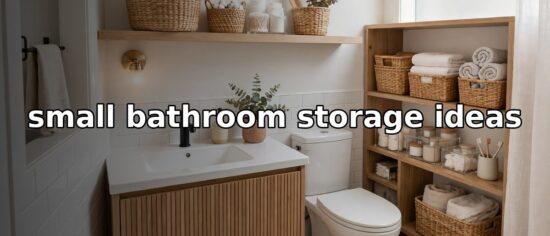
The best small bathroom storage ideas use walls, doors, and the space above the toilet, because bathroom clutter comes from many small items with nowhere fixed to live. Give every category one home near where it is used, and keep daily surfaces nearly clear.
Key Takeaways
- Bathroom clutter is mostly small items, so storage must be specific, not just bigger.
- Walls hold more than floors in a small bathroom: shelves, cabinets, and hooks beat extra furniture.
- The space above the toilet and behind the door is usually wasted, and both are easy wins.
- Keep daily items within reach and the rest stored higher or further away.
- Clear counters make a small bathroom feel larger even when nothing structural changes.
Where Does Bathroom Clutter Come From?
Bathroom clutter builds up because dozens of small items share one small room: bottles, brushes, medicines, cleaning sprays, towels, hair tools, and spares. When none of them has a fixed home, they spread across the sink, the windowsill, and the top of the toilet, and the room feels messy even when it is technically clean. The fix is not a bigger bathroom; it is deciding where each category lives.
Start by sorting everything into groups: daily face and teeth items, hair care, medicines and first aid, cleaning products, towels and linen, and spares. Then assign each group one spot, near where it is used. Daily items belong closest to the sink and mirror, cleaning products belong low and out of reach of children, and spares belong high or in a separate box. Once every group has a home, tidying takes a minute instead of a weekend. For broader home planning, decoration tips decoradhouse connects storage choices with the rest of the home.
How Do You Use the Walls?
Walls are the largest unused surface in most small bathrooms, and they carry storage without stealing floor space. A mirrored wall cabinet above the sink hides daily items behind a surface you already use. Open shelves above the toilet hold towels and spares in baskets, which look tidier than loose bottles. Hooks and rails on the door and beside the shower hold robes, towels, and bags with no drilling in some cases.
Choose wall storage to suit the wall. Tiled walls suit suction or adhesive hooks for light items, while heavier cabinets need proper fixings into solid wall or studs. Keep heavy items low and light items high: a shelf of full shampoo bottles above head height is a hazard, while folded towels up high are safe. Leave one stretch of wall empty, since a bathroom covered in shelves on every side feels like a storeroom rather than a room to relax in.
| Wall spot | Storage idea | Best for |
|---|---|---|
| Above the sink | Mirrored cabinet with shelves inside | Daily face, teeth, and medicine items |
| Above the toilet | Two open shelves with baskets | Towels, spares, and cleaning stock |
| Behind the door | Over-door hooks or a slim rack | Robes, bags, and hair tools |
| Beside the shower | A tall narrow shelf or rail | Towels and shower items within reach |
| Empty wall strip | A slim towel rail or single hook row | Hand towels and washcloths |
What About the Vanity and Over-Toilet Space?
The vanity is where daily storage succeeds or fails, because it is the first surface you reach. Inside the vanity, use small boxes or drawer dividers to separate categories, so a search for one item does not empty the whole cupboard. A pull-out tray under the sink turns the awkward space around pipes into usable storage, and a small turntable in a deep cupboard stops bottles hiding at the back.
Above the toilet, an over-toilet shelf unit or a pair of fixed shelves uses space that is otherwise dead. Keep the lowest shelf high enough to sit comfortably, and store light, non-breakable items there, such as folded towels and spare toilet rolls. A slim rolling cart beside the toilet or vanity is another option: it slides into gaps too narrow for furniture and pulls out when needed. For renovation planning ideas, decoradhouse renovation tips from decoratoradvice offers useful background.
Follow these steps to sort the vanity:
- Empty it completely. Sort everything into daily, weekly, spare, and let go.
- Throw out the let-go pile. Expired medicines, empty bottles, and dried-up products leave first.
- Box the categories. One small box per group inside the vanity, labelled if it helps.
- Put daily items at the front. Anything used every morning sits closest to the door of the cupboard.
- Move spares higher. Stock and refills go on the top shelf or in a separate high box.
How Do You Store Things in the Shower and Near the Tub?
Showers and tubs need storage that survives water, so choose rust-proof materials: stainless steel, plastic, or treated bamboo. A hanging caddy over the showerhead or a corner shelf unit keeps shampoo and soap off the floor of the tub, where bottles topple and grow grime. Suction shelves work on smooth tiles but fail on textured ones, so test before loading them heavily.
Near the tub, a small stool or wall-mounted basket holds towels and reading material without crowding the edge. Keep children’s bath toys in one mesh bag that drains, hung from a hook, rather than scattered across the tub rim. For more room-by-room ideas, upgrades decoradhouse is a helpful place to browse.
| Area | Storage idea | Watch out for |
|---|---|---|
| Shower wall | Corner shelves or a hanging caddy | Suction fails on textured tiles |
| Tub edge | A small stool or wall basket nearby | Bottles left on the rim topple and stain |
| Under the sink | Pull-out tray and small boxes | Pipes leave awkward shapes; measure first |
| Towel storage | Heated rail or hooks near the shower | Damp towels piled up smell quickly |
| Children’s bath items | One draining mesh bag on a hook | Loose toys block the drain and grow mould |
Exceptions and Edge Cases
- Rentals: Stick to removable storage, such as over-door racks, suction hooks, and rolling carts, rather than drilling into tiles. Written permission matters before any fixed shelf goes up.
- Very damp bathrooms: Favour open, ventilated storage over closed boxes, since sealed containers trap moisture and grow mould. For styling and hardware choices, decor tips decoradhouse offers further guidance.
- Homes with children: Keep medicines and cleaning products high and locked if possible, and store children’s items low where they can reach them safely.
- Shared bathrooms: Give each person one basket or shelf, so nobody’s products spread across every surface. Shared shelves need agreed limits to stay usable.
- Mobility needs: Keep daily items at reachable height and avoid high shelves for anything used every day. A rolling cart can bring items to the user instead of the other way around.
- Tiny cloakrooms: Skip the vanity altogether if there is no room. A wall cabinet, one hook, and a small shelf are enough for a room used briefly.
Frequently Asked Questions
What is the best storage for a very small bathroom?
Wall storage wins: a mirrored cabinet above the sink, shelves above the toilet, and hooks behind the door together add a lot of capacity without taking any floor space.
How do I keep bathroom counters clear?
Give every category a home inside a cupboard, on a shelf, or in a basket, and keep only the two or three items used every morning on the counter. Everything else lives behind a door.
Are open shelves or closed cabinets better in a bathroom?
Closed cabinets hide clutter and protect items from steam, so they suit daily products. Open shelves suit towels and decorative items, kept in baskets so they still look tidy.
How do I store towels in a small bathroom?
Roll rather than fold them on shelves, use a heated rail or hooks near the shower, and keep only two or three towels out at a time. The rest belong in a linen cupboard or high basket.
What should never be stored in a bathroom?
Medicines suffer in heat and steam, so keep them in a cool, dry room if possible. Perfumes and natural cosmetics also degrade faster in a steamy bathroom than in a bedroom drawer.
How do I stop mould in bathroom storage?
Ventilate after showers, avoid sealed boxes in damp corners, and let wet items dry before putting them away. A small fan or an open window after bathing does more than any storage product.
Conclusion
A small bathroom feels bigger the moment everything has a home. Use the walls, the space above the toilet, and the inside of the vanity, keep daily items close and spares high, and leave counters nearly clear. With those habits, these small bathroom storage ideas can turn even the tiniest bathroom from a cluttered cupboard into a calm, workable room.