

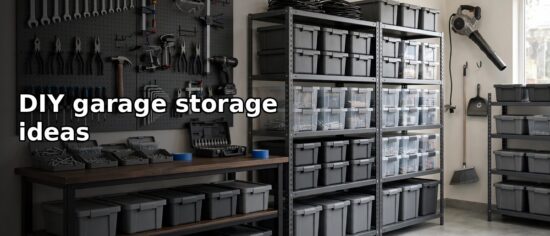
The best DIY garage storage ideas use the walls and ceiling first, because garage floors fill up fast while the upper half of the room stays empty. Hang tools on the wall, lift seasonal items overhead, and keep the floor clear for the car and a safe path through.
Key Takeaways
- Walls and ceilings hold more than the floor in a garage, and they keep the car space free.
- Zone the garage first: tools, garden, sports, seasonal, and car care each get one area.
- Clear bins with labels beat mystery boxes, because you can find things without opening every one.
- Heavy items belong low and close to the wall; light, rarely used items go high.
- Start with one wall and one clear-out, not a full garage rebuild in one weekend.
Where Do You Start in a Messy Garage?
Start by emptying one area at a time, not the whole garage at once. Pull everything off one wall, sort it into keep, move elsewhere, donate, and throw away, then plan storage for what remains. Garages collect duplicates, broken items, and things kept “just in case”. A ruthless first pass often frees a third of the space.
Next, draw zones on paper. Tools near the workbench, garden gear near the door to the yard, sports equipment near the car, and seasonal items in the hardest-to-reach spot, since you need them twice a year. Zones stop the classic problem where every wall holds a bit of everything and nothing can be found. Measure the walls, ceiling height, and car’s footprint before buying panels or racks, so the car fits and the doors open. For broader home planning, decoration tips decoradhouse connects storage choices with the rest of the home.
What Are the Best Wall Storage Ideas?
Walls are the easiest garage upgrade, and they suit almost every budget. A slatwall or pegboard panel holds hand tools, garden tools, and small items on hooks, so everything is visible. A French cleat system, a wall strip with matching brackets, lets you move shelves, bins, and tool holders around as needs change. Heavy-duty wall shelves hold paint cans, toolboxes, and sports gear, as long as they are fixed into studs, not just drywall.
Hang tools by shape and use, not at random. Long-handled tools such as shovels and rakes hang vertically in a row, hand tools hang on a board above the workbench, and bikes hang from wall hooks or a pulley, which frees a surprising amount of floor. Keep sharp tools high enough that children cannot reach them, and daily-use tools at arm height. For renovation planning ideas, decoradhouse renovation tips from decoratoradvice offers useful background.
| Wall idea | Best for | Fixing note |
|---|---|---|
| Pegboard or slatwall panel | Hand tools and small items | Fix into studs for heavy loads |
| French cleat system | Shelves, bins, holders you may move | One wall strip carries many brackets |
| Heavy-duty wall shelves | Paint, toolboxes, and sports gear | Studs only, never drywall alone |
| Vertical tool rack | Shovels, rakes, and long handles | Keeps sharp edges off the floor |
How Do You Use Ceiling and Overhead Space?
Overhead space is ideal for items you need rarely: holiday decorations, camping gear, and seasonal sports equipment. Overhead racks that bolt to ceiling joists hold large flat bins, and a pulley system lowers bikes or kayaks when needed and lifts them away after. Measure twice before drilling: the rack must clear the garage door when it opens, and the car must fit underneath with room to spare.
Only store light, bulky items overhead, and never stack bins so high that lifting them down is dangerous. Use bins with lids to keep dust and pests out, and label every bin on the side you can see from the floor. For more room-by-room ideas, upgrades decoradhouse is a helpful place to browse.
What About Shelving, Bins, and Small Garages?
Freestanding shelving suits garages where wall fixing is difficult, and metal racking carries far more weight than plastic shelving for the same footprint. Keep the heaviest bins on the lowest shelf, weekly items at eye level, and light seasonal bins on top. Clear bins with bold labels save more time than any shelving system, because finding something takes seconds, not a search through every box.
In a small garage, or one that must still park a car, the rules tighten. Use one wall only for deep shelving, keep the other walls shallow, and never let storage creep into the car’s door swing. A fold-down workbench gives you a work surface that disappears when the car comes home, and a rolling cart holds tools during a job and parks in a corner after. For styling and storage ideas, decor tips decoradhouse offers further guidance.
How Do You Plan a Garage Layout That Lasts?
A layout lasts when it matches how you actually use the garage, not how a catalogue looks. Walk through a normal week and note what you reach for: daily tools should sit closest to the door or bench, while items you touch twice a year can live overhead. Leave a clear path from the house door to the car and from the car to the workbench, since a blocked path is the first sign storage is creeping back onto the floor.
Follow these steps to lay out the garage:
- Mark the zones. Tools, garden, sports, seasonal, and car care each get one area.
- Measure the car space. Tape the car’s footprint on the floor and keep storage outside it.
- Install walls first. Panels, shelves, and hooks go up before bins are bought.
- Label as you fill. Every bin gets a label the day it is filled.
| Layout mistake | What happens | Simple fix |
|---|---|---|
| Storage on every wall | No room to work or open car doors | Keep one wall shallow, one wall clear |
| Unlabelled boxes | Every search opens every box | Label bins on the visible side |
| Heavy bins stored high | Dangerous lifting, broken shelves | Heavy low, light high, always |
| No clear path | Clutter creeps back onto the floor | Tape the walkway until the habit sticks |
Exceptions and Edge Cases
- Rentals: Use freestanding shelving and removable hooks rather than drilling into walls or ceilings. Written permission matters before any fixed rack goes up.
- Low ceilings: Skip overhead racks and use wall storage and rolling carts instead. A rack that barely clears the garage door is a bump waiting to happen.
- Damp garages: Raise bins off the floor on shelves or pallets, and use sealed plastic bins rather than cardboard, which soaks up moisture.
- Garages with no car: The same zones work, but you gain a full wall for a workbench. Keep one clear path anyway, since a workshop without one becomes a storeroom.
- Homes with children: Keep sharp tools, chemicals, and heavy items high and locked where possible, and give children one low shelf for sports gear.
- Fire safety: Keep fuel, solvents, and paints away from heaters and water heaters, in approved containers, and never block the exit path.
Frequently Asked Questions
What is the cheapest way to organize a garage?
Start with a clear-out, then add wall hooks and labelled bins. Hooks and bins cost little and solve most garage mess, while expensive cabinets only help once the clutter is gone.
Should I use cabinets or open shelving in a garage?
Open shelving suits workshops, since tools stay visible and reachable. Cabinets suit garages that double as an entrance, since they hide clutter and look tidier.
How much weight can a garage ceiling rack hold?
It depends on the rack and the joists it bolts into, so check the maker’s rating and never guess. Spread the load across several joists, and store only light items overhead.
How do I store bikes in a small garage?
Wall hooks or a pulley system lift bikes off the floor entirely. Hang them by the frame, not by a wheel alone, and keep the most-used bike easiest to reach.
What should never be stored in a garage?
Food, important papers, and anything damaged by heat, cold, or damp belong indoors. Fuel and solvents need approved containers away from heaters, and never block the exit with storage.
How do I keep a garage organized long term?
Give every category one zone, label every bin, and review the layout after a month. The system that survives is the one that is easy to use every day.
Conclusion
A tidy garage is mostly walls, ceilings, and labels, not money. Zone the space, hang what you use, lift what you rarely touch, and label everything, and the floor stays clear for the car. With those habits, these DIY garage storage ideas can turn a crowded garage into a room that works as hard as the house.