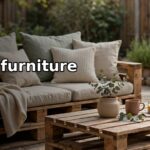

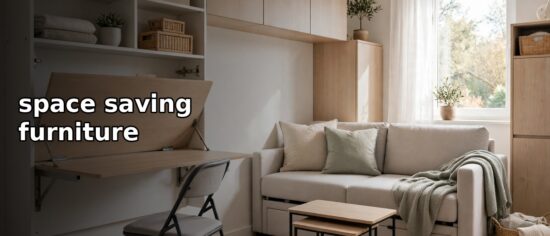
Space saving furniture lets small rooms do double duty without feeling cramped. Fold-down desks, wall beds, extendable tables, and storage pieces give you a full living space in a small footprint, as long as you measure first and choose pieces that match how you actually live each day.
Key Takeaways
- The best pieces serve two or more uses daily, not once in a while.
- Measure the room, doorways, and each piece’s open footprint before buying.
- Fold-down and wall-mounted pieces suit rooms that change function daily.
- Storage-integrated pieces hide clutter without adding extra cabinets.
- Wall-fixed pieces need solid installation and a routine you will follow.
What Is Space Saving Furniture?
Space saving furniture is any piece that takes up less room when not in use, or combines two functions in one footprint. A sofa bed is a couch by day and a bed by night. A wall bed folds into a cabinet, freeing the floor by day. An extendable table seats two normally, six with guests.
The point is to own pieces that work harder, so one small room can host sleeping, working, eating, and relaxing. If you want more small-room ideas alongside furniture picks, decoration tips decoradhouse is a good place to start.
Which Space Saving Furniture Pieces Work Best?
The strongest pieces are the ones you will actually fold, extend, or open daily.
Fold-down desks mount to the wall, fold down for work, and fold flat again when you finish. They need no floor space when closed, but need a sturdy wall.
Wall beds, sometimes called Murphy beds, free an entire room during the day. They suit studios and guest rooms, but cost more than a sofa bed and need careful installation.
Sofa beds and daybeds are the flexible middle ground: a real couch and a real bed with no installation. Cheaper ones can be thin and lumpy, so test the mattress in person.
Extendable tables are the quiet heroes of small dining spaces. A console that extends into a full table, or a drop-leaf round table, hosts dinner parties without dominating the room. Check the extended size, not just the folded size.
Storage-integrated pieces finish the picture. Ottoman beds, beds with drawers, lift-up benches, and hidden-compartment coffee tables replace extra storage furniture for items you reach for often, like bedding or toys.
| Piece | Best For | What It Replaces |
|---|---|---|
| Fold-down desk | Bedroom or living-room office | A full desk setup |
| Wall bed | Studio or guest room, daily use | A permanent bed |
| Sofa bed | Living room with overnight guests | A separate guest bed |
| Extendable table | Small dining corner or kitchen | A large dining table |
| Storage ottoman | Room short on storage | Coffee table plus storage box |
| Bed with drawers | Bedroom with no closet space | A chest of drawers |
How Do You Choose Furniture for a Small Room?
Start with the room, not the catalogue. A piece that looks compact in a showroom can still overwhelm a small room when open. Follow these steps in order:
- Measure the room, the ceiling height, and every doorway the piece must pass through.
- Mark the footprint on the floor with tape, using the open size, not the closed size.
- Walk the normal paths, from door to window, closet, and bed, leaving a comfortable gap.
- List what the room must do each day, then match one piece to each job.
- Check weight limits, wall type, and installation help needed.
- Sit on it, open it, fold it, and lie on it if it is a bed.
Watch traffic flow: a fold-down desk blocking the bedroom door, or a wall bed opening across the only path to the bathroom, will simply stay folded.
How Do You Pick Pieces by Room?
In a living room, prioritise convertible seating: a sofa bed for guests, a storage ottoman for blankets, and a lift-top coffee table rising to dining height.
In a bedroom, storage comes first. A bed with drawers or an ottoman bed replaces a bulky dresser. If it doubles as an office, a fold-down desk on a free wall beats a permanent desk.
In a kitchen or dining corner, the table matters most. A drop-leaf or extendable table keeps daily meals comfortable and still seats guests, with stackable chairs that tuck under it.
In a child’s room, safety and simplicity beat cleverness. Low storage beds, soft-close benches, and fold-away desks leave play space while keeping toys contained. Avoid heavy wall-mounted pieces above a child’s bed.
For styling ideas, see decor tips decoradhouse for ways to keep a small room feeling open.
| Room | Priority Piece | What to Measure First |
|---|---|---|
| Living room | Sofa bed and storage ottoman | Open bed length and walking paths |
| Bedroom | Bed with drawers or ottoman bed | Drawer clearance and door swing |
| Kitchen or dining corner | Extendable or drop-leaf table | Extended size plus chair space |
| Home office corner | Fold-down desk | Wall strength and open desk depth |
| Child’s room | Storage bed and folding desk | Play area left after furniture |
What Should You Check Before You Buy?
With moving parts, quality matters more than with fixed furniture. Test hinges, sliders, and folding mechanisms several times, and look for solid frames rather than thin particleboard joints. A mechanism that wobbles in the store will only loosen with use.
Think about weight and assembly. Wall beds and heavy storage beds may need two people and wall anchors suited to your wall type, and some landlords restrict wall mounting.
Comfort is not optional for pieces used daily. If a wall bed will be your main bed, buy a proper mattress fitting the cabinet’s depth limit. These pieces are among the most practical upgrades decoradhouse homeowners choose for small homes, but an extendable table that moves with you may beat a wall bed if you plan to move soon.
What Are the Exceptions and Edge Cases?
Space saving furniture is not right for every room. A wall bed needing a full clear floor area to open may leave no room to walk, and an extendable table that only fits when extended is just a big table. In those cases, a smaller fixed piece often works better.
People with limited mobility should be careful with pieces demanding lifting, pulling, or bending. A heavy sofa bed mechanism or a wall bed that needs a strong pull can be difficult or unsafe daily. A daybed with a trundle or lightweight folding table may serve better.
Rental restrictions are another real limit. If your lease forbids wall anchors, fold-down desks and wall beds are off the table unless you choose freestanding alternatives. Old or plaster walls may also fail to hold heavy pieces safely.
Budget is a final edge case. Well-made transforming furniture costs more than a basic fixed piece, and a cheap mechanism often fails early. If the budget only reaches a low-quality wall bed, a good sofa bed or storage bench may give better value.
What Are the Most Common Questions About Space Saving Furniture?
Is space saving furniture comfortable for everyday use?
Yes, if you choose quality over novelty. A well-made sofa bed or wall bed with a proper mattress sleeps as well as a regular bed. Test it in person for nightly use.
How much floor space does a wall bed actually save?
A wall bed frees the entire bed footprint by day, usually a room’s largest piece of furniture. The saving counts only if you keep that floor clear.
Can renters use space saving furniture?
Yes, with care. Freestanding pieces like sofa beds and extendable tables need no permission. Wall-mounted pieces need landlord approval and suitable walls, so check your lease first.
What is the best space saving furniture for a studio apartment?
A wall bed or good sofa bed matters most, since sleeping takes the largest area in a studio. Add a fold-down desk and an extendable table, and one room serves as bedroom, office, and dining room.
Does space saving furniture last as long as regular furniture?
It can, but moving parts wear faster than fixed joints, so build quality matters more. Solid frames and metal mechanisms last, while flimsy hinges fail early under daily folding.
How do I keep a small room from looking cluttered with multi-use furniture?
Keep the open floor visible, choose similar tones, and store away anything not in daily use. You can browse more small-space ideas on decoradhouse, but the rule is one piece per job, with the rest hidden in storage furniture.
Is Space Saving Furniture Worth the Investment?
For most small homes, yes. The right pieces turn one room into two or three usable spaces, remove extra storage furniture, and make daily life easier. Choose by real daily use, measure closed and open sizes, and buy quality mechanisms you will happily use daily. Done well, space saving furniture is not a compromise for small rooms, but a smarter way to live in them.