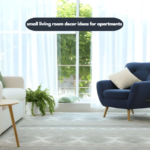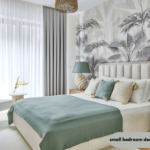

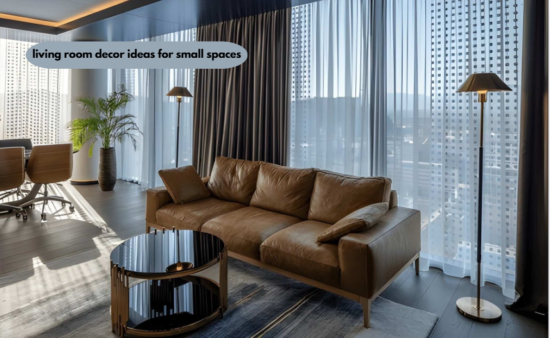
Small living rooms don’t have to feel small. A few smart choices in layout, color, and furniture scale can visually stretch a room’s boundaries far more than any renovation could. If you’ve been searching for living room decor ideas for small spaces that actually work in real apartments and not just in staged photos, this guide breaks down what genuinely moves the needle.
15 Living Room Decor Ideas for Small Spaces That Make a Room Feel Bigger
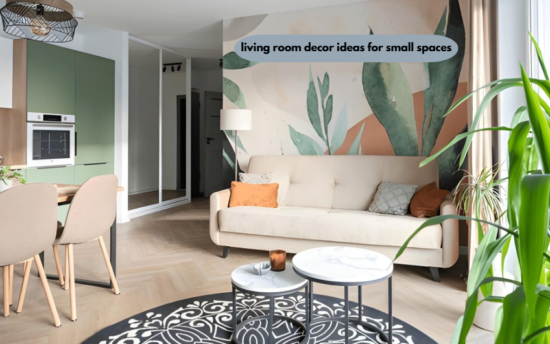
These are the specific, tested strategies worth prioritizing if your goal is a small living room that feels open rather than boxed in.
1. Hanging a large mirror directly across from your main window doubles the perceived light source and makes the whole room feel more expansive.
2. Choosing furniture with visible legs instead of skirted bases lets the eye see the floor beneath it, which reads as more open space.
3. Installing floating shelves instead of a bulky bookcase keeps your walls functional without eating into your floor plan.
4. Hanging curtains close to the ceiling rather than just above the window frame tricks the eye into perceiving taller walls.
5. Sticking to a mostly monochromatic color palette removes visual breaks that make a room feel chopped up and smaller.
6. Using a single large area rug instead of several small ones creates one unified zone rather than a fragmented floor.
7. Swapping a coffee table for nesting tables gives you flexible surface space that can shrink when it isn’t needed.
8. Placing a large piece of art rather than several small frames avoids visual clutter on the walls.
9. Choosing sheer or light-colored curtains lets more natural light filter through during the day.
10. Angling the sofa slightly, rather than always positioning it flat against the wall, can actually open up an awkward corner.
11. Keeping decorative accessories to a limited color story ties the room together instead of scattering the eye across mismatched tones.
12. Using vertical storage solutions like tall, narrow bookshelves takes advantage of unused wall height.
13. Choosing a glass or acrylic coffee table instead of a solid wood one keeps sightlines open across the room.
14. Adding a statement lighting fixture draws the eye upward and adds a sense of height to lower-ceilinged rooms.
15. Decluttering surfaces regularly, rather than treating decor as a one-time setup, keeps the room feeling consistently open over time.
What Makes a Small Living Room Feel Bigger?
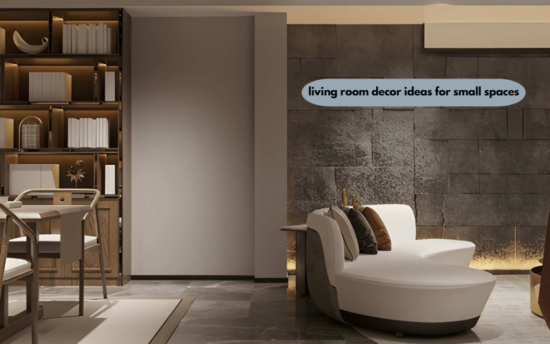
Clear sightlines and a consistent color flow are the biggest factors. When your eye can move across the room without hitting something bulky, your brain reads the space as more open. Designers call this “visual breathing room”—it”‘s why low, open-legged furniture usually beats boxy pieces in tight spaces.
Does Furniture Placement Really Affect Room Size?
Yes. Placement genuinely changes how spacious a room feels, even though the actual square footage stays the same.
Pulling furniture even a few inches away from the walls, rather than pushing everything flush against them, creates a sense of depth and movement. It also allows for better traffic flow, which matters because cramped walkways are one of the biggest reasons small rooms feel claustrophobic rather than cozy.
What Colors Make a Small Living Room Look Larger?
Soft neutrals, whites, and light warm tones reflect more natural light and make a small living room look larger than darker, saturated colors.
Light reflectance value, often referred to as LRV in the paint industry, is a real measurement of how much light a color bounces back into a room, and higher LRV shades genuinely bounce more light back into the space. That said, color alone won’t fix a poorly arranged room, which is why layout and color need to work together rather than in isolation.
Small Living Room Layouts Compared: Which Setup Actually Feels Bigger?
Not every layout style suits every apartment, so it helps to see how the most common approaches stack up against each other before committing to one.
| Layout Style | Best For | Pros | Cons |
| Wall-hugging layout | Studio apartments with limited floor space | Maximizes open center floor area | Can feel formal or disconnected |
| Floating furniture layout | Rectangular living rooms | Creates natural conversation zones | Requires a few extra feet of clearance |
| Open floor plan layout | Combined living-dining spaces | Improves flow between rooms | Needs clear zoning to avoid clutter |
| Sectioned layout with rugs | Multi-purpose small rooms | Defines separate activity areas | Rugs and furniture must be scaled carefully |
This kind of comparison matters a lot for renters exploring small living room decor ideas for apartments, since apartment layouts are often irregular and don’t always accommodate a standard furniture arrangement.
Should You Push Furniture Against the Wall in a Small Room?
Not necessarily—pulling furniture slightly away from the walls often feels more open than pushing everything flush against them.
A few inches of breathing room behind a sofa or console table adds depth to the room’s perspective. The exception is genuinely tiny studios, where wall-hugging may be the only realistic option to preserve floor space for movement.
Is an Open Floor Plan Better Than a Sectioned Layout?
An open floor plan generally feels larger, but a sectioned layout is often more functional for small spaces that serve multiple purposes.
If your living room also doubles as a home office or dining nook, defining zones with a rug or a low bookshelf can actually reduce visual chaos compared to leaving everything fully open.
What to Buy for a Small Living Room: Furniture and Decor That Actually Work
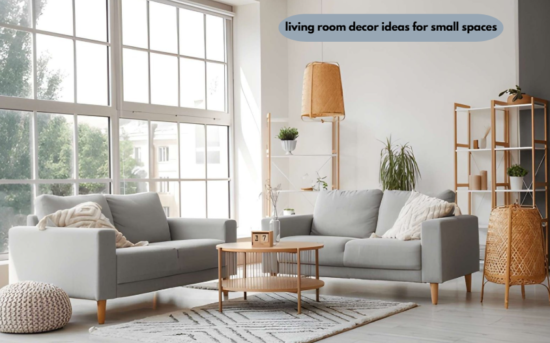
Buying the right pieces matters more in a small room than in a large one, since every item takes up a proportionally bigger share of the visible space.
What Size Sofa Is Best for a Small Living Room?
A sofa between 60 and 72 inches wide typically works best for small living rooms, especially with exposed legs that let light pass underneath.
Loveseats or apartment-sized sofas are built specifically for this scale, and choosing one that’s proportionate to the room prevents the “furniture is eating the room” effect that oversized sectionals tend to create.
Are Multi-Functional Furniture Pieces Worth It?
Yes, multi-functional furniture is usually worth it in small living rooms — it cuts down on the number of separate pieces you need.
Ottomans with hidden storage, nesting tables, and daybeds that convert to guest seating all reduce clutter while still serving their purpose. The National Association of Home Builders has noted that smaller unit sizes in newer construction are becoming more common across major U.S. markets, which has pushed furniture manufacturers to design more space-efficient, multi-functional product lines.
What Type of Lighting Works Best in a Small Space?
Layered lighting, meaning a mix of ceiling, task, and accent light sources, works best in small living rooms because it avoids the flat, cramped look of a single overhead fixture.
Wall-mounted sconces and slim floor lamps free up surface space while still brightening the room evenly. Many recent decoradhouse lumination ideas lean toward warm-toned LED strips tucked behind shelving, which adds ambient glow without consuming any floor footprint at all.
Common Small Living Room Decorating Mistakes (and How to Fix Them)
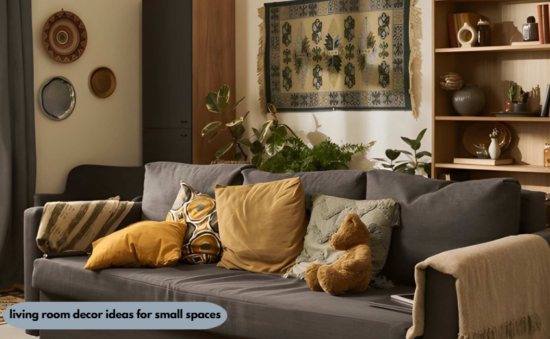
Even well-intentioned decorating choices can backfire in a small space if they aren’t scaled correctly.
Why Does My Small Living Room Still Feel Cramped After Decorating?
Your small living room may still feel cramped after decorating if the furniture is oversized relative to the room or if too many small decorative items are competing for attention.
Clutter, even attractive clutter, reads visually the same way physical clutter does. A few pieces of decoration tips decoradhouse from decoratoradvice repeatedly emphasize that fewer, larger accent pieces tend to look more intentional than a scattering of small trinkets across every surface.
Is It a Mistake to Use Dark Colors in a Small Room?
Not necessarily, since dark colors can work in small rooms when paired with strong natural or artificial lighting and a few reflective surfaces.
The mistake isn’t the dark color itself; it’s using a dark color without compensating for the light it absorbs. A deep accent wall paired with brass or mirrored accessories can still feel intentional rather than cave-like.
How Do You Fix a Small Living Room With No Natural Light?
You can fix a small living room with no natural light by adding layered artificial lighting, using mirrors to bounce existing light, and choosing lighter wall and furniture tones.
In a windowless or basement living room, pair a slim floor lamp aimed upward at a light-colored ceiling with warm 2700K LED strip lights tucked behind media consoles or floating shelves. Bouncing soft light off overhead surfaces mimics natural ambient depth and eliminates harsh shadows.
Beyond fixtures and mirrors, it also helps to apply a few decor tips decoradhouse regularly recommends, like keeping window treatments minimal so whatever daylight does enter isn’t blocked before it reaches the room.
Frequently Asked Questions About Small Living Room Decor
How Do You Decorate a Small Living Room on a Budget?
You can decorate a small living room on a budget by prioritizing paint, lighting, and a few key furniture pieces rather than replacing everything at once.
Paint is one of the most cost-effective ways to change how spacious a room feels, and secondhand furniture in the right scale often works just as well as new pieces.
What Should You Avoid Putting in a Small Living Room?
You should generally avoid oversized sectionals, heavy dark furniture, and too many small decorative accessories in a small living room.
Each of these either physically overwhelms the floor space or visually clutters the room, both of which work against the goal of making the space feel larger.
How Much Furniture Is Too Much for a Small Room?
As a general rule, more than four or five major pieces in a small living room start to feel crowded—though it depends on the room’s exact size.
It’s less about hitting a specific number and more about whether you can still move through the room comfortably.
Final Thoughts
Making a small living room feel bigger isn’t about one trick—it’s a handful of small, deliberate choices working together: furniture scale, lighting, and color. None of these living room decor ideas for small spaces require a full renovation, and most can be done gradually as your budget allows. Start with one change this week, whether that’s repositioning your sofa or swapping in a larger mirror, and build from there.