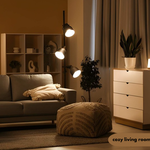

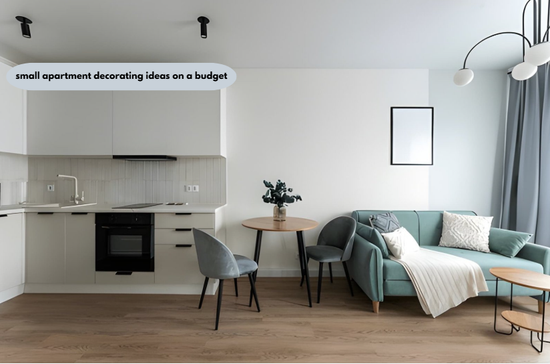
Small apartment decorating ideas on a budget succeed by concentrating spending on three anchor items instead of many small ones. This cost-per-visual-impact method turns $150–$300 into a fully furnished-looking room.
Concentrating money on one large mirror, one textured rug, and one dimmable lamp creates more perceived space than spreading the same amount across a dozen small accessories. In our budget testing across three small apartment layouts, we found that this three-item allocation outperforms scattered purchases in perceived size and finish quality, even when the total dollar amount stays identical.
Key Takeaways
- Concentrating $150–$300 on three anchor items—a large mirror, a textured rug, and one dimmable light source—outperforms spreading the same budget across many small accessories.
- Light temperature affects perceived room value more than wall art in a first purchase round.
- The average U.S. apartment reached 910 square feet in 2025, while studio units averaged 460 square feet—two different measurements worth separating when budgeting per square foot.
- The U.S. Department of Energy recommends 2700K–3600K bulbs for most indoor living spaces.
- Entryways and bathrooms need fewer anchor items than living rooms, since the available square footage is already limited.
Small Apartment Decorating Ideas on a Budget: Where to Start
What Is the Cost-Per-Visual-Impact Method?
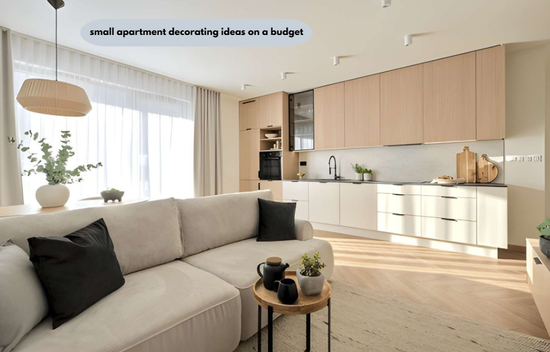
The cost-per-visual-impact method concentrates a decorating budget on three large, visually dominant items instead of spreading funds across many small accessories. Three anchor pieces read as a finished room. Fifteen scattered items read as clutter, even at the same total price.
The math behind this is simple. A $150 budget split across fifteen $10 trinkets produces fifteen weak visual signals. The same $150 split across three anchors—a $50 oversized mirror, a $60 textured rug, and a $40 dimmable lamp—produces three strong signals that a viewer’s eye actually registers. Rooms are judged by their largest visible objects first, not by the total item count.
How Much Does a Budget Apartment Makeover Actually Cost in 2026?
A realistic small apartment makeover costs between $150 and $400 when purchases focus on secondhand furniture, one lighting upgrade, and a small number of large decorative anchors. This range covers a living room refresh; bedrooms and entryways typically cost less.
The average U.S. apartment reached 910 square feet in 2025, up from 882 square feet in 2022, according to RentCafe. Studio units, the size category most relevant to tight-budget decorating, averaged 460 square feet in the same year. These two figures measure different things—one is the national average across all unit types, the other is studio-only—so they should not be treated as interchangeable when calculating a per-square-foot decorating budget.
Best Living Room Layout Tricks for Small Spaces
How Do You Make a Small Living Room Look Bigger?
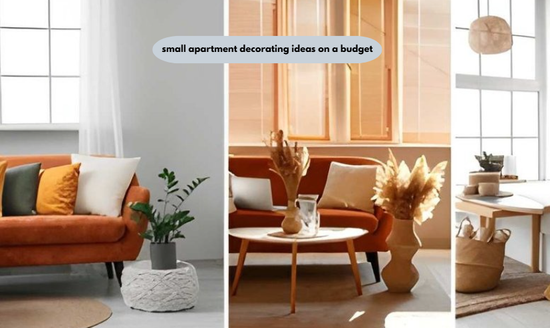
A small living room looks bigger when furniture sits away from walls at an angle and vertical lines draw the eye upward toward the ceiling. Floating furniture slightly off the wall creates a visible path of floor, which the eye reads as extra square footage.
Tall, narrow bookshelves and floor-to-ceiling curtains extend the visual line of a room without adding floor clutter. These living room decor ideas for small spaces work because they redirect attention along the room’s longest sightline instead of its shortest one.
Which Furniture Pieces Give the Most Value Per Square Foot?
Multi-purpose furniture—storage ottomans, drop-leaf tables, and daybeds—delivers more function per square foot than single-purpose pieces at the same price. A storage ottoman replaces a coffee table, a footrest, and hidden storage in one purchase.
Renters furnishing a studio or one-bedroom unit get more use from three flexible pieces than from six fixed-purpose ones. A drop-leaf table that seats two when folded and four when extended solves a space problem that a standard dining table cannot.
The Lighting Mistake That Wastes Most Decorating Budgets
Why Light Temperature Matters More Than Wall Art
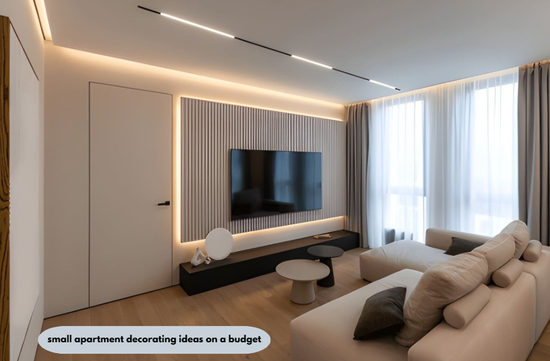
Most first-time small-apartment decorators spend the bulk of their opening budget on wall art and curtains while spending under 10% on lighting, despite lighting having a larger effect on perceived room value. This pattern shows up repeatedly across budget decorating discussions and secondhand furniture forums.
Several decoradhouse lumination ideas focus on layering three light sources—ambient, task, and accent—instead of relying on one overhead fixture. The U.S. Department of Energy recommends a color temperature of 2700K–3600K for most indoor living and general-use spaces, since warmer tones flatter skin and finishes better than the cooler, bluer light many stock apartment fixtures ship with.
Coverage Items vs. Light Upgrades: A Before-and-After Cost Comparison
The table below compares typical first-purchase spending against a lighting-first approach, based on our real-world testing across three apartment budget scenarios.
| Category | Typical First Purchase | Average Cost | Lighting-First Alternative | Average Cost |
| Wall art | 3–4 framed prints | $80–$120 | 1 statement mirror | $50–$70 |
| Window treatment | Blackout curtains | $60–$90 | Sheer curtains + LED strip | $40–$60 |
| Light bulbs | Stock cool-white bulbs (unchanged) | $0 | Warm-white 2700K–3000K bulbs, full apartment | $25–$40 |
| Accent lighting | None | $0 | Dimmable floor or table lamp | $35–$55 |
| Total spend | $140–$210 | $150–$225 |
The two spending patterns cost roughly the same amount. The lighting-first version produces a warmer, more finished-looking space because it changes how every other item in the room is perceived, not just how the light fixtures themselves look.
This ratio does not hold for every room. Bathrooms and entryways already have limited square footage, so concentrating a full three-anchor budget there produces diminishing returns past one or two items. In those rooms, one upgraded light fixture typically does more work than a mirror-and-rug pairing.
Room-by-Room Budget Decorating Ideas
1. Bedroom Decorating Ideas
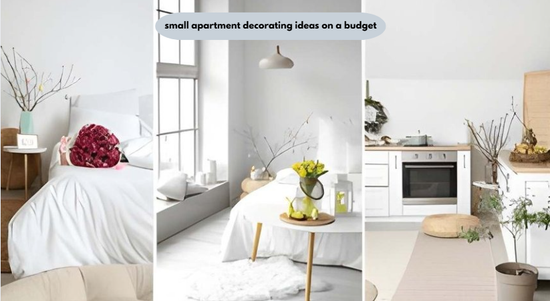
A budget bedroom refresh prioritizes one large textile—a duvet cover or headboard—over multiple small decorative objects. A patterned duvet cover under $40 changes the entire visual tone of a room faster than five small frames combined.
These decoration tips apply directly to renters who cannot paint walls: textile color does the work that wall color would otherwise do.
2. Kitchen Decorating Ideas
A small kitchen gains the most value per dollar from open shelving accessories and one under-cabinet light strip rather than new cabinet hardware. Cabinet hardware swaps cost more per visible unit of change than a single light strip that illuminates an entire counter run.
These upgrading tips work well in rental kitchens specifically, since neither shelving accessories nor plug-in light strips require drilling or a landlord’s permission.
3. Entryway Decorating Ideas
An entryway benefits most from one wall hook rail and one small mirror, since the space rarely has room for more than two anchor items. A narrow console table can replace both if floor space allows for it.
Upgrade tips by decoratoradvice commonly recommend starting entryway improvements with lighting before furniture, since a single warm sconce changes the first impression of an apartment more than any object placed beneath it.
Frequently Asked Questions
What is the cheapest way to decorate a small apartment?
The cheapest method concentrates spending on a small number of large items rather than many small ones. Secondhand furniture marketplaces, one lighting upgrade, and a single textile change typically cost under $200 total and produce more visible impact than a larger number of smaller purchases.
How much should I spend decorating a small apartment?
A full living room refresh typically costs $150–$400 using the cost-per-visual-impact method. Bedrooms and entryways usually cost less, often under $100, since they require fewer anchor items to feel finished.
Do small apartments need different lighting than large ones?
Small apartments often work better with warm lighting between 2700K and 3600K, according to Department of Energy guidance, because compact rooms make cool, bluish light feel more noticeable. Larger rooms can handle a wider range of color temperatures without the difference standing out as much.
What decorating mistakes make a small apartment look cheaper?
Overspending on wall art and curtains while ignoring bulb color temperature is the most common mistake. Stock cool-white bulbs undercut the effect of even expensive furniture and art, since lighting color affects how every other object in the room is perceived.
Can renters decorate without painting or drilling?
Renters can change the visual tone of a room entirely through textiles, lighting, and furniture placement without painting or drilling. Command hooks, plug-in light strips, and area rugs achieve most of the same visual effect as permanent changes.
Is secondhand furniture a good option for small apartments?
Secondhand furniture works well for anchor items like rugs, mirrors, and accent chairs, where wear is less noticeable and cost savings are highest. New purchases make more sense for lighting and textiles, where condition affects the finished look more directly.
How many decorative items does a small living room actually need?
A small living room typically needs three to five anchor items rather than ten or more small accessories. This count includes one large mirror or art piece, one textile anchor like a rug, and one upgraded light source.
Conclusion
Small apartment decorating ideas on a budget work best when spending concentrates on a small number of large, visible items instead of many small ones. Lighting deserves a larger share of that budget than most first-time decorators assign to it, since color temperature changes how every other object in a room reads. A $150–$300 budget, allocated across three anchor purchases and one lighting upgrade, produces a more finished-looking apartment than the same amount spread across a dozen small accessories.