

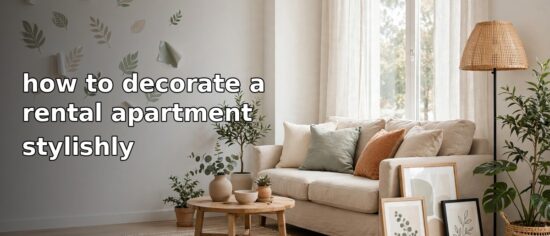
To decorate a rental apartment stylishly, start with what you can reverse: removable wall decor, layered lighting, well-sized rugs, and furniture you can take when you move. Check your lease first, get permission in writing for anything semi-permanent, and leave the apartment as you found it.
Key Takeaways
- Your lease comes first: read it, and get written permission before painting, drilling, or swapping fixtures.
- Removable methods do most of the work: adhesive hooks, peel-and-stick wallpaper, tension rods, and leaning art need no holes.
- Style comes from layers: rugs, curtains, lighting, plants, and textiles add warmth without permanent changes.
- Buy portable pieces: furniture, lamps, and mirrors that move with you are the best investment for renters.
- Photograph every room at move-in and move-out, keep original fixtures, and reverse changes slowly.
What Should You Check Before You Decorate a Rental?
Read your lease before you buy anything. Look for rules on painting, drilling, adhesive products, fixture changes, and what must be restored when you leave. If a rule is unclear, ask your landlord directly, and keep the answer in writing. For wider home ideas to adapt to a rental, decoration tips decoradhouse is a useful starting point.
Take dated photos of every room at move-in. These photos protect you if there is ever a question about what was already marked or worn. Store original hardware, showerheads, and light shades in a labelled box, so you can put everything back at move-out.
Everyday wear from normal living is usually treated differently from damage, but the line varies by state, city, and lease. When in doubt, choose the reversible option.
How Can You Style Rental Walls Without Damage?
Bare rental walls are the fastest thing to fix, and rarely need a drill. Start with one focal wall, and test any adhesive product in a hidden spot first, since even removable products can lift weak paint.
Follow these steps for hanging art safely with adhesive strips or hooks:
- Clean the surface. Wipe with rubbing alcohol and let it dry, so dust and grease do not weaken the bond.
- Match the product to the weight. Check the package rating and use enough strips for the frame.
- Press and wait. Press firmly as directed, then wait the full bonding time before hanging.
- Hang nothing heavy over a bed.
- Remove slowly at move-out. Pull the tab straight down, as directed, not outward.
Peel-and-stick wallpaper works best on one smooth, clean accent wall. Apply it slowly to avoid bubbles, and peel it back at a low angle when you leave. Large art can also lean against a wall, which suits tall mirrors and oversized canvases and needs no fixing. If you get written permission to paint, ask for the original colour name or code at the same time.
| Wall method | Best for | Deposit risk | Removal tip |
|---|---|---|---|
| Adhesive hooks and strips | Framed art, light decor | Low if limits followed | Pull tabs straight down |
| Peel-and-stick wallpaper | One accent wall | Low; test first | Peel slowly, low angle |
| Leaning art and mirrors | Large pieces, tall mirrors | Very low | Just lift away |
| Tension rods | Curtains, cafe curtains | Very low | Slide out, no marks |
| Painting with permission | Full colour change | Higher | Repaint original colour |
How Do You Lay Out a Small Rental So It Feels Bigger?
Layout matters more than new purchases. Measure rooms and doorways before ordering, and choose pieces sized for the space, with room to walk around them. Legged furniture and slim-profile tables keep sightlines open and floors visible, which helps a small room feel larger.
Use rugs to define zones, especially in a studio. One larger rug under the front legs of seating usually pulls the area together better than several small rugs. Hang curtains high and wide, near the ceiling and beyond the frame, so windows look taller.
Mirrors are a renter’s best friend. One large mirror opposite or beside a window bounces daylight around the room, and a leaning floor mirror needs no drilling. Keep walkways clear, and edit ruthlessly. For upgrade ideas that suit rented homes, decoradhouse upgrade tips by decoratoradvice offers practical direction.
What Lighting Makes a Rental Look Stylish?
Most rentals have a single harsh ceiling light that flattens a room. Layer three kinds of light instead: general light from the ceiling, task light where you read or work, and soft accent light, such as a small shelf lamp or plug-in sconce, for evenings.
Swapping bulbs is the easiest upgrade of all. Warm-white bulbs suit living rooms and bedrooms, while brighter, cooler light suits a desk or kitchen work area. Smart bulbs screw into existing lamps, need no wiring, and change brightness through the day; keep the originals to reinstall when you leave.
Plug-in sconces and LED strips add glow without an electrician, but use them safely. Do not overload power strips, keep cords away from walkways and heaters, and never cover lights with fabric or paper. If a fixture flickers, smells hot, or trips a breaker, switch it off and tell your landlord. For more lighting and styling ideas, upgrading tips decoradhouse is worth a look.
How Do You Decorate Each Room Without Permanent Changes?
Work room by room, starting with the room you use most, then layer outward from the largest items.
| Room | Quick stylish win | Avoid |
|---|---|---|
| Living room | Large rug, layered lamps, leaning mirror | Oversized sets that crowd the room |
| Bedroom | Bedding layers, accent wall, soft lighting | Drilling a headboard into the wall |
| Kitchen | New knobs (keep originals), open shelving, plants | Peeling tiles on damaged or damp surfaces |
| Bathroom | Higher rod, fabric shower curtain, matching towels | Drilling into tile |
| Entryway | Freestanding bench, over-door rack | Blocking the door swing with furniture |
In the kitchen, swapping cabinet knobs is a classic renter upgrade, but only if your lease allows it, and keep every original for move-out. In the bathroom, a fabric shower curtain on a higher tension rod makes the room feel taller, and an over-toilet shelf adds storage without drilling. Plants suit every room and move with you. More room-by-room inspiration is in decor tips decoradhouse.
Exceptions and Edge Cases
- Fresh paint: wait until paint has fully cured before using adhesive products; fresh or weak paint can lift.
- Textured or damaged walls: adhesives grip poorly on rough, damp, or flaking surfaces, so lean art instead.
- Wallpapered walls: do not stick hooks or paper over existing wallpaper unless your landlord agrees, since removal can tear it.
- Tile and glass: use products rated for smooth surfaces, and never drill tile without written permission.
- Heavy items: shelves, televisions, and large mirrors usually need proper fixings; if drilling is banned, choose freestanding or leaning alternatives.
- Shared walls and noise: thick curtains, rugs, and upholstered pieces soften echo in thin-walled apartments.
- Pets and children: keep hanging items out of reach, and secure tall mirrors and shelving against tipping where needed.
- Strict leases: if your lease bans adhesive products, focus on furniture, textiles, lighting, and plants.
Frequently Asked Questions
Can I paint a rental apartment?
Only with lease permission or written landlord agreement. Ask for the original colour name or code, and plan to repaint before you leave.
Do adhesive hooks damage walls?
Usually not, if used within their weight limit on clean, smooth walls and removed slowly as directed. Test a hidden spot first, since weak or fresh paint can lift.
What is the safest way to hang art in a rental?
Use adhesive strips rated for the frame’s weight, or lean large pieces against the wall. Never hang heavy frames over beds.
Can I use peel-and-stick wallpaper in a rental?
Yes, on smooth, clean walls, ideally one accent wall. Test a small patch first, and check your lease.
How do I make a small rental apartment look bigger?
Use one large rug, hang curtains high and wide, add a large mirror near a window, layer lighting, and choose right-sized, legged furniture.
What should I do before moving out of a decorated rental?
Remove products slowly, reinstall all original fixtures and hardware, repaint if you agreed to, and take dated photos of every room.
Conclusion
A stylish rental needs no permanent changes: just a clear plan, reversible methods, and pieces you can carry to your next home. Check the lease, get permission in writing, and let rugs, lighting, mirrors, and textiles do the heavy lifting. Keep this guide to how to decorate a rental apartment stylishly handy.