

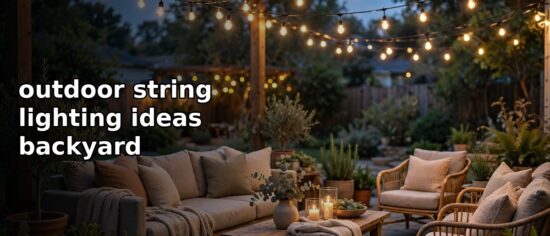
Outdoor string lighting ideas backyard makeovers rely on warm LED strands, a clear hanging pattern, and outdoor-rated power planning to turn a yard into an inviting space. Pick solar or plug-in lights for your layout, hang them high and taut, and enjoy safe glow for dinners and nights outside.
What Are the Key Takeaways?
- Warm white LED bulbs give the most flattering evening glow and use little power.
- Plan power and measurements before buying a strand.
- Zigzag and perimeter patterns suit most yards; tree-to-house runs suit larger ones.
- Only outdoor-rated, weatherproof lights and extension leads belong outside.
- Hang strands high and taut, leaving slack at trees for growth.
What Makes Outdoor String Lights Work So Well in a Backyard?
String lights work because they spread light gently across a whole space instead of blasting one bright spot. A single porch bulb leaves corners dark, while strands overhead create an even canopy that makes patios and paths feel welcoming after sunset.
They also define a room without walls. When strands run above a seating area, that space reads as the place to gather, eat, and talk. The effect is relaxed rather than formal, suiting family dinners, quiet evenings, and larger gatherings.
For broader inspiration, decoration tips decoradhouse offers practical ideas that pair well with a lighting plan, from seating layouts to decor touches that do not compete with the glow.
Which String Light Type Should You Choose?
The three main types are solar, plug-in, and battery-powered LED strands, and each suits a different yard. Solar lights cost nothing to run and need no nearby outlet, but they depend on direct daytime sun and fade sooner on cloudy days or in shaded yards. Plug-in lights give steady, bright light all evening and suit patios near an outdoor outlet. Battery lights work anywhere for short periods, but batteries need regular changing or recharging.
Bulb style matters too: small fairy bulbs give a delicate sparkle, while larger globe bulbs give a warmer, cafe-style glow for dining areas. Warm white flatters skin and food far better than cool white, which can feel stark outdoors. Choose shatterproof plastic bulbs if children or pets use the yard.
To shape light around seating and plants, explore decoradhouse lumination ideas alongside your string-light plan, so overhead and ground-level light work together.
| Light Type | Best For | Power | Glow and Feel |
|---|---|---|---|
| Solar LED | Sunny patios and fences | Sun-charged battery | Soft, fades late at night |
| Plug-in LED | Dining areas and large yards | Outdoor outlet | Steady, bright, reliable |
| Battery LED | Small corners and rentals | Batteries | Flexible, best for short use |
| Solar globe | Open lawns and pergolas | Sun-charged battery | Warm, cafe-style glow |
How Should You Plan Power and Spacing Before You Hang Anything?
Measure first, buy second. Measure the route with a tape, including drops from a wall to a tree or pole, and add extra for gentle sag. A strand that is too short forces awkward joins, while one that is far too long leaves loose loops that look untidy and catch the wind.
Spacing shapes the look: close bulbs give a dense, festive ceiling, while wider spacing gives a calmer feel for quiet seating areas. For dining areas, aim for bulbs roughly one hand-span to a full span apart, and wider spacing for large lawns.
Power planning is just as important. Check how many strands can safely connect end to end, and never overload a single outdoor outlet. Keep connections off the ground, sheltered from puddles, and protected from rain. garden tips decoradhouse can help you plan routes that protect plants and keep cables out of walkways.
What Hanging Patterns Look Best in a Backyard?
The zigzag pattern is the most popular: strands run back and forth across a patio, creating a canopy that feels festive yet even. It suits rectangular spaces and needs two solid sides, such as a wall and a fence, pergola, or poles.
The perimeter pattern is simpler and calmer. Lights follow the edges of a patio, deck, or fence line, outlining the space without covering it. This suits small yards and renters, with fewer supports and less sag to manage.
Tree-to-house runs give a natural, romantic feel. A strand runs from a high point on the house to a sturdy tree branch, or between two trees, forming a gentle fan shape. This suits larger yards, but check branch strength and keep enough height to walk beneath safely.
For dining patios, keep the lowest point well above head height. Never let strands droop into walkways or near a grill, fire pit, or heater.
patio decoration decoradhouse has ideas for furniture and finishing touches that will not block the glow.
| Hanging Pattern | Best Yard Shape | Supports Needed | Effect |
|---|---|---|---|
| Zigzag | Rectangular patio or deck | Two opposite sides | Festive canopy overhead |
| Perimeter | Small yard or fenced patio | Fence, wall, or deck edge | Clean, calm outline |
| Tree-to-house | Large lawn with strong trees | House wall and tree branch | Natural, romantic fan shape |
| Parallel rows | Long, narrow garden | Poles or wires along both sides | Orderly, modern ceiling of light |
How Do You Hang String Lights Safely Outdoors?
Safety starts with the label: use only outdoor-rated lights with weatherproof sockets and cables, and check for cracked bulbs or frayed wire before hanging. Replace damaged strands rather than taping over faults.
Follow these steps for a secure, tidy installation:
- Check that walls, fences, poles, and branches can hold the weight.
- Install hooks, eye screws, or sturdy poles, and add a support wire for long or heavy runs.
- Hang the strand loosely first, adjust the sag so it looks even, then tighten gently.
- Connect power last, keeping plugs sheltered, off the ground, and away from water.
- Switch on at dusk, walk the whole route, and adjust any strand that droops too low or pulls tight.
Take extra care around trees. Leave slack and use loose ties rather than nails or tight wire that can cut into bark. After storms, inspect for fallen branches, loose hooks, and water in sockets.
What Are the Exceptions and Edge Cases for Backyard String Lights?
String lights are not the right answer for every corner of a yard. Very small balconies or narrow passages can feel crowded under a canopy, so a single short strand along a railing, or a lantern, often looks better. Heavily shaded yards may leave solar lights too dim, so plug-in lights, or a mix of solar accents and one plug-in strand, is smarter.
Windy yards need shorter runs, stronger supports, and shatterproof bulbs. Near the coast, choose well-sealed hardware against salt air. If you rent, use removable hooks or freestanding poles rather than drilling without permission.
Finally, string lights are ambience, not task lighting. Steps, paths, and cooking areas still need brighter, focused light, so pair overhead glow with a path light where footing matters.
What Do People Ask Most About Backyard String Lights?
Are solar string lights bright enough for a backyard?
Solar lights suit small patios and decorative corners in sunny spots, but are usually dimmer than plug-in lights. For a main dining area, plug-in LED strands give more reliable brightness.
How high should backyard string lights hang?
Keep the lowest point above head height for the tallest person using the space. Over seating only, a lower run can feel cosier, but walkways need full clearance.
Can string lights stay outside all year?
Outdoor-rated lights can stay up through normal weather, but covering connections in harsh winters extends their life. Inspect cables and supports each spring.
How many strands do I need for a patio?
Measure your full hanging route, including sag and drops, then divide by the lit length of one strand. Buy one spare, since matching colour and bulb size later is not always easy.
Are LED string lights safe around children and pets?
LED bulbs run cooler than old bulbs and shatterproof versions reduce breakage risk, but cables still need care. Keep strands out of reach of children and secure loose cable.
Do string lights use a lot of electricity?
Modern LED strands use very little power, so an evening of plug-in lights costs far less than a large outdoor heater. Solar strands cost nothing to run, though batteries need replacing after a few seasons.
Conclusion
The best plan is simple: choose the right light type for your sun and outlets, pick a pattern that fits your yard, and hang outdoor-rated strands high, taut, and safe. Start with these outdoor string lighting ideas backyard and adapt pattern, spacing, and brightness until the space feels right for how you use it.