

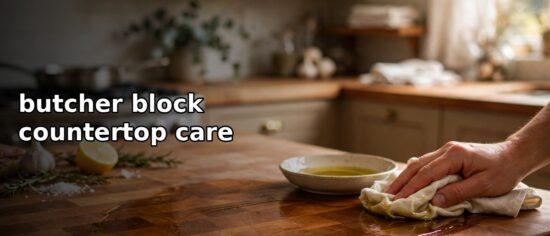
Butcher block countertop care is simple once you know the routine: oil the wood regularly with a food-safe finish, wipe up spills promptly, and fix small marks before they sink in. Done consistently, this routine keeps a butcher block top smooth, water-resistant, and safe for food for many years.
A wood countertop asks for more attention than stone or laminate, but it rewards that with warmth and a surface you can renew again and again. Good butcher block countertop care is mostly habit: oil on schedule, quick wipe-downs, and prompt attention to stains. If the countertop is part of a wider kitchen refresh, decoration tips decoradhouse can help you plan the finishes so the wood stays the focal point.
Key Takeaways
- Oil with food-safe mineral oil or a beeswax blend, never cooking oil or furniture varnish.
- Wipe up water and spills right away; standing water damages wood fastest.
- Clean daily with warm water and mild soap, then dry fully.
- Lift most stains with salt and lemon or baking soda paste before sanding.
- Sand and re-oil when the surface feels rough, looks pale, or stops beading water.
What Oil Should You Use on a Butcher Block Countertop?
The safest choice is food-grade mineral oil: colourless, odourless, and unable to turn rancid. A beeswax and mineral oil blend, sold as board butter, adds a thicker layer.
Avoid vegetable, olive, and coconut oil: they can go rancid, leave a sticky film, and smell unpleasant. Avoid tung oil blends, linseed oil, and furniture varnish unless clearly labelled food-safe for countertops.
| Oil or Finish | Best For | Notes |
|---|---|---|
| Food-grade mineral oil | Regular oiling | Thin, soaks in well |
| Beeswax and mineral oil | Sealing after oiling | Apply thinly and buff |
| Cooking oils | Nothing on a countertop | Turn rancid, go sticky |
How Often Should You Oil a Butcher Block Countertop?
Oil a new top daily for the first week, then weekly for the first month. After that, oil monthly, or every two to three weeks in a busy kitchen or dry climate.
Test with a few drops of water: beading means the finish is working, soaking in means it is time to oil. A steady oiling habit is the heart of butcher block countertop care. To apply oil:
- Clean with warm, soapy water and dry completely.
- Pour a little food-grade mineral oil onto the wood.
- Spread thinly with a clean cloth, with the grain.
- Let it soak for four hours, or overnight for a new top.
- Wipe away oil that has not soaked in.
- Repeat if the wood still looks dry, then buff lightly.
How Do You Clean a Butcher Block Countertop Every Day?
Wipe with a cloth dampened with warm water and a little mild dish soap, then wipe again with clean water. Dry the top fully: damp wood near the sink causes most dark spots and swelling.
After raw meat, wipe with diluted white vinegar or a food-safe kitchen spray, then rinse and dry. Never soak the surface or leave a wet cloth on it. Wipe up spills as you cook, because liquids and acidic foods can stain if they sit. For more ideas on a practical, welcoming kitchen, see decor tips decoradhouse.
How Do You Remove Stains, Rings, and Scratches?
Start with the gentlest method. For a dark ring or light stain, sprinkle coarse salt over the mark, rub it with half a lemon, and let it sit a few minutes before wiping away and drying. A baking soda and water paste handles most everyday stains, and a little white vinegar can help a stubborn spot; rinse promptly and dry.
A light scratch often disappears after the next oiling, as the oil darkens the exposed wood. For a deeper scratch, rub gently with fine sandpaper along the grain only, wipe away the dust, and oil the area. Never sand across the grain.
| Problem | What to Try First | When to Sand |
|---|---|---|
| Water ring or light stain | Salt and lemon | If it stays dark |
| Food or juice stain | Soapy water, then baking soda paste | If it soaked deep |
| Light scratch | Oil the area | Rarely needed |
| Deep scratch or cut | Sand lightly along the grain | If the cut catches a fingernail |
When Should You Sand and Re-Oil a Butcher Block Countertop?
Sand and re-oil fully when the surface no longer responds to oil alone: deep stains that will not lift, a rough texture, wide knife marks, or a top that drinks oil unevenly. Most well-kept tops need this only once every year or two.
Sand with the grain, from 120-grit to 220-grit. Wipe away all dust and let the wood dry fully before oiling. Then apply two or three thin coats of food-grade mineral oil, letting each soak in for several hours and wiping off the excess. If the damage is deep, decoradhouse renovation tips from decoratoradvice can help you decide whether a refresh is enough.
What Should You Never Use on a Butcher Block Countertop?
Never use bleach, oven cleaner, abrasive powders, or strong disinfectants on wood: they strip the oil finish, bleach the grain, and leave residues unsafe for food. Avoid steel wool and rough scouring pads, which scratch the surface and open the grain to moisture.
Standing water is just as damaging. Do not let water pool around the sink, under a dish rack, or beneath a plant pot, and never leave a wet sponge or cloth on the wood overnight. Never put a hot pan directly on the surface; use a trivet, because heat can scorch the wood.
Is a Butcher Block Countertop Safe for Food Preparation?
Yes, when it is cleaned properly and kept oiled. The key is hygiene: clean after each use, especially after raw meat, poultry, or fish, and never let raw juices sit on the wood.
Wash with warm, soapy water after handling raw meat, then rinse and dry. For extra reassurance, wipe with diluted white vinegar and let it air dry. Use a separate cutting board for raw meat if you prefer, and sand away any deeply grooved or cracked area, because grooves can hold moisture and bacteria. Before changing how you use the surface, upgrades decoradhouse has ideas for kitchen changes that work well alongside a wood countertop.
Exceptions and Edge Cases
End-grain butcher block, made from small blocks glued with the grain facing up, is more absorbent and may need oiling more often than edge-grain tops. A serving-only top needs far less oil than one used daily for chopping.
Tops near a sink, dishwasher, or window face more water and sun, so they dry out faster; oil them more often and wipe them dry after use. Antique or reclaimed wood can have hidden cracks or old finishes, so test any oil or cleaner on a small area first. If your countertop has a hard film finish, do not oil over it.
Frequently Asked Questions
How often should I oil my butcher block countertop?
Oil a new top daily for the first week, weekly for the first month, then monthly. If water soaks in instead of beading, oil it.
Can I use olive oil on a butcher block countertop?
No. Cooking oils can turn rancid, leave a sticky film, and smell unpleasant. Use food-grade mineral oil or a beeswax blend.
How do I remove a dark water stain from wood?
Rub coarse salt with half a lemon over the mark, let it sit, then wipe away and dry. If it remains, try a baking soda paste.
Is it safe to cut directly on a butcher block countertop?
Yes, light cutting is fine, and the wood can be sanded and re-oiled when knife marks build up. Use a separate board for raw meat.
What should I do if my countertop feels rough?
Sand lightly with the grain, wipe away the dust, let it dry, and apply a fresh coat of oil.
Can I fix a burn mark on a butcher block countertop?
A light scorch can often be sanded out along the grain, then oiled. A deep burn may need a professional, so always use a trivet.
Conclusion
A wood countertop needs no complicated products, just a steady routine of oiling, gentle cleaning, and quick fixes when marks appear. Keep the surface dry, use only food-safe oil, and sand and re-oil when the wood tells you it is ready. With that simple habit, butcher block countertop care becomes second nature, and your countertop will stay warm, smooth, and ready for everyday cooking.