

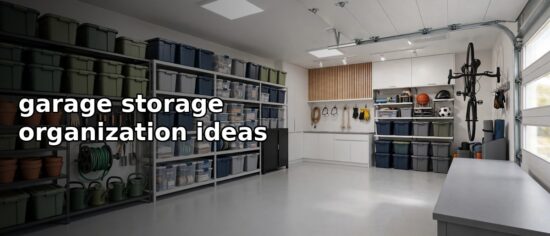
Garage storage organization ideas work best when they focus on decisions, not more stuff. Sort everything once, give each group a labelled home and a seasonal reset, and your garage stays usable year after year instead of filling up again within months.
Key Takeaways
- A garage stays tidy because of a system, not one clean-up day.
- Sort first: every item needs a keep, donate, or toss decision.
- Zones and labels stop the drift back into clutter.
- Rotation keeps off-season gear from crowding daily essentials.
- A twice-yearly reset and daily habits keep the system working.
How Do You Sort a Garage Without Getting Stuck?
Most garages fill up gradually, one box at a time. Sorting beats moving piles around. Work one zone at a time.
For each item, ask: have I used it in the past year, will I realistically use it in the next six months, and is it broken or duplicated? If the first two answers are no, it should leave. Broken tools, dried-out paint, and chargers for devices you no longer own occupy space without adding value.
Sort into keep, donate, and toss. Keep means the item has a job and a home. Donate means it still works for someone else. Toss means it is broken or unsafe. Put donations by the door and drop them off the same weekend, or they become clutter again. The thinking behind good decoration tips decoradhouse applies here: everything needs a purpose and a place.
What Is a Zone-and-Label System That Actually Stays Organized?
A zone system groups items by how you use them, not where they happened to land. When tools, garden supplies, sports gear, and decorations each have their own area, you stop hunting through unrelated boxes, and you stop putting things down “just for now” because their real home is unclear.
Labels make zones stick. Say exactly what belongs inside: “Camping” beats “Miscellaneous.” Large labels on each bin mean nobody opens four boxes to find the right one. Labelled bins on existing shelves work perfectly well; the system is the grouping and labelling, not new hardware.
| Zone | What Belongs There | Label Rule |
|---|---|---|
| Daily use | Car supplies and bags used weekly | Name the job, not the type |
| Tools and repairs | Hand tools you actually use | One clear label per group |
| Garden and outdoor | Garden tools, pots, and gloves | Keep garden items together |
| Sports and hobbies | Sports gear, camping gear, and hobby kits | Label by activity |
| Seasonal | Holiday decorations and winter gear | Add the season to the label |
Garden tools are bulky and easy to scatter, so keep them in one garden zone. garden tips decoradhouse can help you judge which items earn their place, rather than holding broken pots.
How Does Seasonal Rotation Keep the Garage Working All Year?
Even a well-sorted garage fills up if every season’s gear stays within easy reach all year. Rotation moves current-season items forward and off-season items back, twice a year. You swap only the groups that change with the weather, and check nothing has crept into the wrong zone.
In spring, bring forward garden tools and outdoor gear, and move winter items back. In autumn, reverse it. Fixing swaps to the first weekend of spring and autumn turns rotation into a habit.
| Season | Move Forward | Move Back and Check |
|---|---|---|
| Spring | Garden tools and outdoor games | Winter gear and holiday boxes |
| Summer | Camping gear and water toys | Heavy coats and winter sports gear |
| Autumn | Winter gear and holiday decorations | Garden tools unused until spring |
| Winter | Snow gear and indoor hobby supplies | Summer sports and camping gear |
During each rotation, spend ten minutes checking for drift: a camping bin gaining a paint tin, or a tool zone gaining old clothes. Returning strays stops small messes becoming a full re-sort. If an item sat untouched through two rotations, it may be ready to donate.
What Daily Habits Prevent Re-Clutter?
A garage does not need daily deep cleaning, just habits that stop clutter settling. The key rule: everything returns to its labelled home the same day. A tool left out overnight becomes a pile by the weekend.
Try this short routine whenever you use the garage:
- Take out only what you need, and put it back as soon as the task ends.
- If something has no label and no zone, decide its home on the spot.
- Keep one small “outgoing” box by the door for donations and returns.
- Empty the outgoing box every weekend, so it never becomes storage.
- Do a two-minute scan before closing the door: clear the walkway and return strays.
Small upgrades decoradhouse to your routine make the biggest difference: a labelled outgoing box, or a rule that shopping bags never live in the garage, protects the sorting work you already did.
How Do You Keep the System Working With Family Members?
The best system fails if only one person understands it. Everyone needs to know the zones, the labels, and the main rule: put it back where it belongs. Labels must be clear enough for a teenager, guest, or tired adult to follow without thinking.
Give each person ownership of their own zone where it makes sense, and have everyone return their own items. When children outgrow equipment or hobbies change, review that zone together and donate what no longer fits. The clear-labelling approach behind good decor tips decoradhouse helps: a space that is easy to read at a glance stays tidy without reminders.
Agree on short household rules: nothing new enters without a labelled home, one item in means one unused item out, and the walkway stays clear. If someone keeps breaking a rule, the system is usually at fault: the label may be unclear or the bin too full. Fix the system first.
What Should You Do When the Garage Fills Up Again?
Even good systems fill up as life changes: a new hobby or growing family adds items faster than old ones leave. Do not start over. Run a focused reset on the overflowing zones, using the same keep, donate, and toss decisions.
Start with the zone causing most friction: the one blocking the walkway or hiding daily items. Empty only that zone, re-sort it honestly, and return only what still earns its place. Clearing one zone often restores the whole garage.
Set a limit for each zone: when a bin is full, something must leave before anything new goes in. This “full means full” rule stops slow growth. If a zone keeps overflowing, rethink the grouping: perhaps two hobbies merged into one zone, or seasonal items stayed forward all year.
Exceptions and Edge Cases
Not every garage fits a standard system. If you share one, agree on separate, marked areas first, with shared items in one neutral zone. If it doubles as a workshop or gym, protect the walkway first.
Renters should rely on portable, labelled bins, so the system can move with them. Households with limited mobility should put daily-use zones at reaching height. Finally, hazardous materials, important documents, and anything damaged by heat, cold, or damp belong elsewhere, even if the garage has empty space.
Frequently Asked Questions
How often should I reorganize my garage?
A full re-sort is rarely needed more than once a year. Do a light reset twice a year during rotation, and rely on two-minute daily habits otherwise. If one zone overflows, reset that zone alone.
What is the first step in organizing a garage?
Start with sorting, not rearranging. Pull out one zone at a time and give every item a keep, donate, or toss decision.
How do I decide what to keep and what to donate?
Use the past-year test: if you have not used it in a year and have no plan to use it in the next six months, donate it. Duplicates and broken items should also leave.
Should every family member follow the same garage system?
Yes, but it must be easy to follow without instructions. Clear labels, one home per group, and short rules beat a complicated plan only one person remembers.
What if I do not have much space in my garage?
Focus on limits and rotation, not fitting more in. Keep only what you use, rotate seasonal items firmly, and let a full bin mean something must leave first.
How can I stop my garage from getting messy again?
Give every group a labelled zone, return items the same day you use them, and empty an outgoing box weekly. The twice-yearly reset catches small drift before it becomes a large mess.
Conclusion
A tidy garage comes from honest sorting, clear zones and labels, rotation, and habits the household can keep. Start with one zone, make every keep decision count, and let the twice-yearly reset do the rest. With that system, garage storage organization ideas become a routine that keeps your garage working, season after season.