
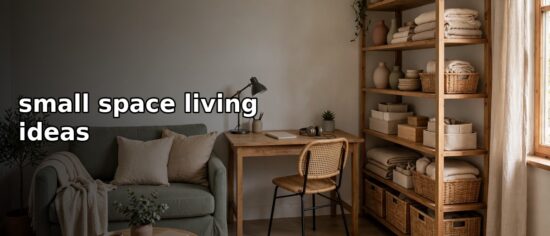
Small space living ideas work best when one room has a clear job for every corner, so this system divides a single living room into sit, work and store zones. Each zone gets one multifunctional piece, shared floor space, and a short daily reset.
Key Takeaways
- One living room can hold sit, work and store zones without new walls.
- Each zone needs one main piece for its daily job.
- Zones share the middle, so nothing should block the path.
- Vertical storage keeps daily items off the floor.
- A ten-minute daily reset matters more than any piece of furniture.
How Does the Three-Zone System Work in One Living Room?
Think of the room as three small stations around one open centre. The sit zone is for resting and reading, the work zone for a laptop or study, and the store zone holds books, chargers, throws and papers.
These small space living ideas cover one living room only. Each zone has a fixed place, piece and closing step. Without them, items drift and papers stay on the sofa.
The sit zone takes the best light and the longest wall, the work zone the quietest corner near a socket, and the store zone the wall hardest to sit against, often beside the door. For broader home inspiration, decoration tips decoradhouse is a useful place to browse.
What Does Each Zone Need to Do?
Each zone needs one piece that does its main job well and helps with a second job too. You are choosing three workhorses, one per zone.
The sit zone needs a compact two-seat sofa with storage under the seat. It should seat two people, hold a throw and a book, and leave the floor visible.
The work zone needs a fold-down or narrow wall desk with a shelf above it. The desk holds a laptop and a notebook, nothing more. The shelf holds a charger, pens and a paper tray. When work ends, the desk clears completely.
The store zone needs one tall, narrow cabinet with doors on the lower half. Open shelves at eye level hold books and a few objects you like to see. Closed doors below hide chargers, cables and hobby supplies.
| Zone | One main piece | What it does | Closing step |
|---|---|---|---|
| Sit | Compact storage sofa | Seats two, hides throws | Cushions straight |
| Work | Fold-down wall desk | Holds laptop and notebook | Surface clear |
| Store | Tall narrow cabinet | Books above, clutter below | Doors shut |
Measure the wall and the space each piece needs in use. A desk that opens across the path to the door will stay closed. For styling that keeps the three zones looking like one room, decor tips decoradhouse offers practical guidance.
How Do the Three Zones Share One Room?
The zones do not each get a third of the floor. They each get a wall or a corner, and they share the middle.
The sit zone borrows the centre when guests visit. The work zone borrows it for a chair that pulls out, then pushes back. The store zone never borrows the centre.
Follow these steps to set the shared layout:
- Place the sofa first. Put it against the longest wall, leaving a walkway at one end.
- Place the desk second. Put it in the quietest corner, chair tucked in when not in use.
- Place the cabinet third. Put it where its doors clear the sofa and desk chair.
- Mark the centre. Leave a clear patch wide enough for two people to pass.
- Test a normal day. Sit, work for ten minutes, fetch a book, and put it back.
Give the sit zone a floor lamp and the work zone a small desk lamp, so different heights of light mark where one zone ends and the next begins. For layered lighting ideas, decoradhouse lumination ideas is worth a look. Use one calm base colour and repeat one accent in a cushion and a desk tray.
How Do You Store Things Vertically Without Clutter?
Vertical storage is where small space living ideas either work or fail. Every level needs a named job. Eye level is for things you use and like to see. Above eye level is for weekly items. Below waist level, behind doors, is for things you use rarely.
Start at the store zone, then add one vertical spot to each other zone. The sit zone gets one slim shelf for the book you are reading. The work zone gets the shelf above the desk.
Keep the top of the cabinet nearly clear. A crowded top makes the ceiling feel lower. One small plant is enough. If the desk shelf holds more than a handful of items, move the extras behind the cabinet doors. For larger changes that support this system, upgrades decoradhouse has ideas worth considering before you spend.
| Level | What lives there | Rule |
|---|---|---|
| Above eye level | Weekly items, spares | One box per shelf, labelled |
| Eye level | Daily books | Only this week’s items |
| Waist level | Tray, chargers, remotes | Everything has one fixed spot |
| Below waist, behind doors | Cables, hobby kits | Doors shut after use |
What Is the Daily Reset Routine?
The reset is a short routine, done at the same time every day, that returns each zone to its starting state. Ten minutes is enough. It matters more than the furniture, because even the best layout drifts without it.
Reset in zone order. Start at work: close the laptop, file papers, and clear the desk. Move to sit: straighten cushions, fold the throw, and return books. Finish at store: shut cabinet doors and check the centre.
Tie the reset to an existing habit, such as after dinner. If you share the room, keep it simple: one person, one zone, every day. If a day is missed, run the normal reset the next day.
Exceptions and Edge Cases
- Very small rooms: If the room cannot hold all three pieces, shrink the work zone first.
- Rooms with a television: Put it in the sit zone only, opposite the sofa. Do not add a second screen to the work zone.
- Shared living rooms: Agree the zone boundaries with everyone who uses the room.
- Rooms with low light: Give the work zone the brightest corner.
- Renters: Choose freestanding pieces if wall fixings are not allowed.
- Homes with children or pets: Keep the lower cabinet doors shut and choose a sofa fabric that wipes clean.
Frequently Asked Questions
How do I divide one living room into three zones without walls?
Use furniture placement, light and a rug to mark each zone: sofa on one wall, desk in a quiet corner, cabinet on the remaining wall.
What size sofa works in a three-zone living room?
A compact two-seat sofa or loveseat works best. It seats two and leaves wall space for the desk and cabinet.
Can the work zone really fit in a living room?
Yes, if it stays small and closes each day. A fold-down desk with one shelf above it holds a laptop and a tray.
Where should the storage go in a small living room?
Put one tall, narrow cabinet on the wall hardest to sit against, often beside the door. Keep daily items at eye level and hide cables behind closed doors.
How long does the daily reset take?
About ten minutes, in the same order each day: clear the desk, straighten the sofa, then shut the cabinet doors.
What if my living room is too small for all three zones?
Shrink the work zone first. A desk that folds flat still gives you a real work surface.
Conclusion
One living room does not need more furniture. It needs three clear zones, one good piece in each, vertical storage with a job for every level, and a short daily reset. When the zones share the centre, the room stays calm and usable. Start with the sofa, add the desk and cabinet, and let these small space living ideas turn a crowded room into a system.