

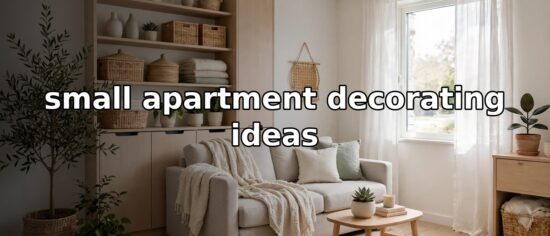
Small apartment decorating ideas work best when you plan zones, choose furniture to scale, and use light and storage to clear the floor, because small homes feel cramped from clutter and oversized pieces, not size alone. Measure every room, keep one open path, and let each item earn its place.
Key Takeaways
- Zones beat walls in a small apartment: define sleeping, working, eating, and relaxing areas even in one room.
- Furniture sized for the space matters more than any single decor item; one oversized sofa can swallow a room.
- Light, mirrors, and a calm palette make a small home feel open without any structural change.
- Hidden storage is the real decoration: when clutter disappears, the apartment instantly looks bigger.
- Buy pieces that do two jobs, such as a bed with drawers or a table that folds away.
Where Do You Start in a Small Apartment?
Start with measuring, not shopping. Measure each room, doorway, and lift shaft, then sketch the layout on paper or in a free room-planner app. Mark the fixed points you cannot move: doors, radiators, sockets, and windows. Then decide your zones. A studio might hold a sleep zone, a work zone, and a living zone in a single room, separated by a rug, a bookshelf, or a curtain rather than a wall.
Next, clear before you decorate. Remove anything broken, duplicated, or unused for a year, and give everything left a fixed home. Decorating around clutter never works: new cushions and art just compete with the mess. For wider home ideas to adapt to a small space, decoration tips decoradhouse is a useful starting point.
How Do You Make a Small Room Feel Bigger?
Light is the fastest change you can make. Keep window treatments light and hang curtains high and wide, near the ceiling and beyond the frame, so windows look taller. Use several light sources instead of one harsh ceiling light: a floor lamp, a table lamp, and a small accent light make a room feel layered rather than flat. Mirrors opposite or beside windows bounce daylight around, and a large mirror beats several small ones.
Colour helps too. A calm, pale palette across walls, large furniture, and bedding reduces visual breaks, so the eye travels further. That does not mean everything must be white: one accent colour repeated in cushions, art, and a throw ties the room together without chopping it up. Keep floors as visible as possible, since a clear floor reads as more space, so choose legged furniture that shows floor beneath it.
| Room | Best trick | Avoid |
|---|---|---|
| Living area | One rug sized to the seating group, not a tiny floating rug | A sofa set that fills every wall |
| Bedroom | Bedding in one calm colour, storage under the bed | A headboard and wardrobe that block the window |
| Kitchen corner | Open shelving for daily items, closed storage for the rest | Countertops covered in appliances |
| Work corner | A desk facing the light, vertical storage above it | A bulky desk that blocks a walkway |
| Entryway | Wall hooks, a slim bench, and a mirror by the door | A shoe pile with no fixed home |
What Furniture Works Best in Small Spaces?
Choose furniture by function first and size second. A sofa bed or daybed lets a living room host guests without a spare room. A drop-leaf or extendable table seats two daily and more when friends visit, then folds back. Ottomans with storage hide blankets and chargers while serving as extra seats. A tall, narrow bookshelf uses wall height instead of floor area and draws the eye upward.
Follow these steps before buying anything large:
- Measure the spot and the route in. A sofa that fits the room but not the door or lift is useless.
- Tape the footprint on the floor. Live with the outline for a day and check walkways stay clear.
- Pick legged, slim-profile pieces. Visible floor beneath furniture makes rooms feel larger.
- Demand a second job. If a piece only stores or only seats, a better option probably exists.
- Leave breathing room. One empty stretch of wall or floor is a design choice, not wasted space.
For upgrade ideas that suit compact homes, decoradhouse upgrade tips by decoratoradvice offers practical direction.
How Do You Add Storage Without Clutter?
Storage works when it is specific: every category of item gets one place, and that place is near where the item is used. Use vertical space first. Tall shelves, hooks on doors, and cabinets above eye level hold a surprising amount without touching the floor. Under-bed boxes take seasonal clothes and spare bedding, while a storage bench by the door swallows shoes, bags, and keys.
Keep daily surfaces clear on purpose. A kitchen counter should hold only what you use every day; everything else belongs in a cupboard. The same rule applies to desks and bedside tables. Rotate rather than accumulate: when something new arrives, something old leaves. For more styling and storage ideas, upgrading tips decoradhouse is worth a look.
| Storage idea | Best spot | Effort note |
|---|---|---|
| Under-bed boxes | Bedroom, seasonal clothes and bedding | Low cost, instant result |
| Tall narrow shelving | Living room or hallway walls | Uses height, keeps floor clear |
| Over-door racks | Bathroom and bedroom doors | No drilling, renter-friendly |
| Storage ottoman | Living area, blankets and chargers | Doubles as seating |
| Wall hooks and rails | Entryway, kitchen, and bathroom | Small change, daily payoff |
Exceptions and Edge Cases
- Studios: Use rugs and lighting, not furniture walls, to mark zones. A bookshelf as a divider works only if it leaves light and air flowing around it.
- Shared apartments: Agree on shared zones and private zones before decorating, and keep personal items in your own storage so common areas stay calm.
- Very low ceilings: Skip tall wardrobes and hanging lights that drop low. Horizontal lines, low furniture, and wall-mounted lights keep the ceiling feeling higher.
- Homes with children or pets: Choose washable fabrics, rounded corners, and closed storage for small items. A beautiful open shelf is a poor fit where little hands or paws reach it.
- Dark apartments: If windows are small or shaded, lean harder on mirrors, pale colours, and layered lamps. For wall styling and hardware choices, decor tips decoradhouse offers further guidance.
- Temporary stays: Favour freestanding and removable pieces over fitted storage, so your decorating moves with you.
Frequently Asked Questions
What is the first step in decorating a small apartment?
Measure everything and plan zones before buying anything. Knowing your room sizes, walkways, and fixed points stops the most common small-space mistake: furniture that is too big for the room or blocks a door.
What colours make a small apartment look bigger?
Pale, calm colours across walls and large furniture reduce visual breaks and make rooms feel open. Add one accent colour repeated in small items for warmth, rather than many strong colours that chop the space into pieces.
Should I use a rug in a small living room?
Yes, but size it right. A rug should sit under the front legs of the seating group, not float tiny in the middle. One larger rug pulls the area together better than several small rugs, which break the floor into fragments.
How do I decorate a small apartment on a budget?
Start with light, layout, and decluttering, which cost little. Then add mirrors, curtains hung high, and multi-purpose storage. Paint is the cheapest big change, and second-hand solid furniture often fits small spaces better than bulky new sets.
Can a small apartment have a home office?
Yes, if the work zone is specific and compact. A wall-mounted desk, a chair that tucks away, and vertical storage above the desk create a real workspace in a corner without taking over the room.
How do I keep a small apartment from feeling cluttered?
Give every item a fixed home, keep daily surfaces clear, and follow a one-in, one-out rule. Closed storage hides visual noise, while open shelves should hold only items you genuinely like looking at.
Conclusion
A small apartment does not need to feel small. Plan zones, choose furniture that fits and does two jobs, use light and mirrors generously, and hide clutter in smart storage, and the same rooms will feel calmer and larger. With those steps, these small apartment decorating ideas can turn a compact home into a place that feels open, organised, and truly yours.