

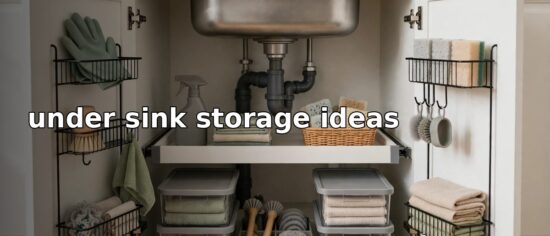
Under sink storage ideas work best when you treat the space as two small zones instead of one dark cupboard: a low zone for tall bottles and a high zone for everyday items on a pull-out tray. Measure around the pipes first, then add stackable bins and a door rack, so nothing is ever buried behind something else.
Key Takeaways
- Measure around the pipes before buying any organizer.
- Split the space into a low zone for tall bottles and a high zone for daily items.
- Pull-out trays beat fixed shelves, because nothing hides at the back.
- Door racks hold sprays and small items without using shelf space.
- Keep a leak check in your routine, so a drip never ruins the storage.
Why Does Under-Sink Storage Fail?
The space under a sink is the most awkward cupboard in the house. Pipes run through the middle, the drain trap sticks out at the back, and the floor is often lower than the rest of the cabinet. Anything placed at the back disappears, and anything tall blocks the door.
The fix is not a bigger cupboard. It is a plan that works around the pipes instead of fighting them. Once you know the clear width, the clear height and the position of the trap, you can choose organizers that fit the gaps rather than the whole space. For wider home ideas, decoration tips decoradhouse is a useful place to start.
Leaks are the other reason this cupboard fails. A slow drip under a sink goes unnoticed for months, and by the time the floor is soft, the bottles and boxes stored there are ruined. Any storage plan for this space has to include a way to see the floor and check for water.
How Do You Measure and Plan the Space?
Start by emptying the cupboard completely and wiping the floor dry. Measure the inside width at the front, the depth from the door to the back wall, and the height from the floor to the lowest pipe. Note where the drain trap sits and how far the supply pipes stick out from the wall.
Draw the space on paper, or mark it with masking tape on the floor. Place the tallest bottle you own in the spot it will live, and check that the door closes without touching it. Leave a clear lane at the front for items you reach for daily, and push rarely used items to the sides of the pipes.
Measure twice, buy once: a tray two centimetres too wide is useless.
| Measurement | How to take it | Why it matters |
|---|---|---|
| Inside width | Door opening, wall to wall | Decides tray and bin width |
| Depth | Door to back wall | Decides how far a tray can slide |
| Height to lowest pipe | Floor to pipe underside | Decides whether a second tier fits |
| Trap position | Distance from each side wall | Decides the gap you must leave clear |
What Should Go Under the Kitchen Sink?
The kitchen sink cupboard should hold cleaning supplies and nothing else. Dish soap, surface spray, sponges, dishwasher tablets and bin bags belong here, because they are used at the sink. Food, pet supplies and tools belong elsewhere, because they crowd out the cleaning items and get wet when a bottle leaks.
Keep one bottle of each cleaner, and store refills elsewhere. A single spray bottle in daily use plus one spare is enough; five half-empty bottles of the same cleaner are clutter, not backup.
Use the door for small items. A rack fixed to the inside of the door holds sponges, cloths and gloves, and a small caddy on the door holds the spray bottle you use most.
What Should Go Under the Bathroom Sink?
The bathroom sink cupboard has the same pipes but different contents: spare toiletries, cleaning products, hair tools and first-aid items. The same zoning rule applies, but the items are smaller, so stackable bins and drawer-style trays work better than tall bottles.
Put daily items on the top tier of a two-tier pull-out, and spare stock below. Keep medicines and first-aid items in a lidded box on the top tier, where they are easy to find in a hurry. For bigger changes that make room for better storage, decoradhouse renovation tips from decoratoradvice can help you plan the work.
Keep cleaning products separate from toiletries, in their own bin, so a leaking bleach bottle cannot drip onto toothbrushes or towels.
How Do You Use Pull-Out Trays and Door Racks?
A pull-out tray slides out on runners, bringing the back of the cupboard to you. Choose a tray with a raised edge and a waterproof base, so bottles stay put and spills stay on the tray.
Two-tier pull-outs suit tall cupboards; where the pipes leave too little height, use a single low tray plus a stackable bin beside the trap.
Door racks use space that would otherwise be wasted. A narrow rack on the inside of the door holds spray bottles upright, while a small wire basket holds cloths and sponges. Check the door closes with the rack loaded before you fix it permanently. For small changes that add storage without building work, upgrades decoradhouse has ideas worth considering.
Set up a tray in this order:
- Measure the clear space beside and below the pipes.
- Choose a tray that fits the gap, with a raised edge and waterproof base.
- Fit the runners level, so the tray slides smoothly when loaded.
- Load heavy bottles at the back, light items at the front.
- Leave the floor visible around the trap, so a leak shows at once.
How Do You Keep the Cupboard Dry and Safe?
Water is the enemy here, so lay a waterproof mat on the cupboard floor under the pipes; a mat that changes colour when wet shows a small drip before the floor swells.
Check the cupboard once a month for damp, crust on fittings, or a wet mat; a five-minute check catches a drip while it is still a drip.
Keep cleaning chemicals in a lidded bin so a tipped bottle cannot spread. For styling that ties the pieces together, decor tips decoradhouse offers practical guidance.
| Risk | Early sign | What to do |
|---|---|---|
| Slow drip from trap | Damp mat, musty smell | Tighten the trap by hand, then call a plumber if it continues |
| Leaking spray bottle | Sticky floor, faded labels | Stand bottles in a lidded bin |
| Swollen cupboard floor | Soft spot, peeling finish | Dry it, find the source, replace the board |
| Mould on pipes | Dark spots, damp smell | Wipe dry, improve airflow, check for a leak |
What Are the Exceptions and Edge Cases?
- Pedestal sinks: A pedestal sink has no cupboard, so use a freestanding unit or a slim trolley beside it instead.
- Very shallow cupboards: If the depth is under 40 cm, skip pull-out trays and use stackable bins and door racks only.
- Homes with children: Keep cleaning products in a lidded box with a childproof latch, and store medicines on the top tier out of reach.
- Renters: Use freestanding trays and bins that need no screws, and a stick-on door rack instead of a drilled one.
Frequently Asked Questions
What is the best organizer for under the sink?
A pull-out tray with a raised edge and waterproof base, sized to fit beside the pipes. It brings the back of the cupboard to you.
How do I store tall bottles under the sink?
Put them in the low zone beside the trap, on the floor or a low tray, and keep the door rack for short items.
Should I use the space behind the pipes?
Only rarely used items, in a labelled bin.
How do I stop the cupboard smelling damp?
Lay a waterproof mat, check for drips monthly, and leave the door open for an hour after cleaning so the space dries.
Can I fit a second shelf under the sink?
Only if the height to the lowest pipe allows it. Measure first; a shelf that blocks the trap is worse than no shelf.
What should never go under the sink?
Food, pet food, towels and anything that must stay dry. Cleaning products and toiletries belong here; everything else does not.
Conclusion
Under-sink storage works when you measure around the pipes, split the space into a low zone and a high zone, and use a pull-out tray so nothing hides at the back. Keep cleaning supplies in the kitchen cupboard and toiletries in the bathroom one, use the door for small items, and lay a mat so a leak shows early. With those habits, these under sink storage ideas will turn the most awkward cupboard in the house into one of the tidiest.