











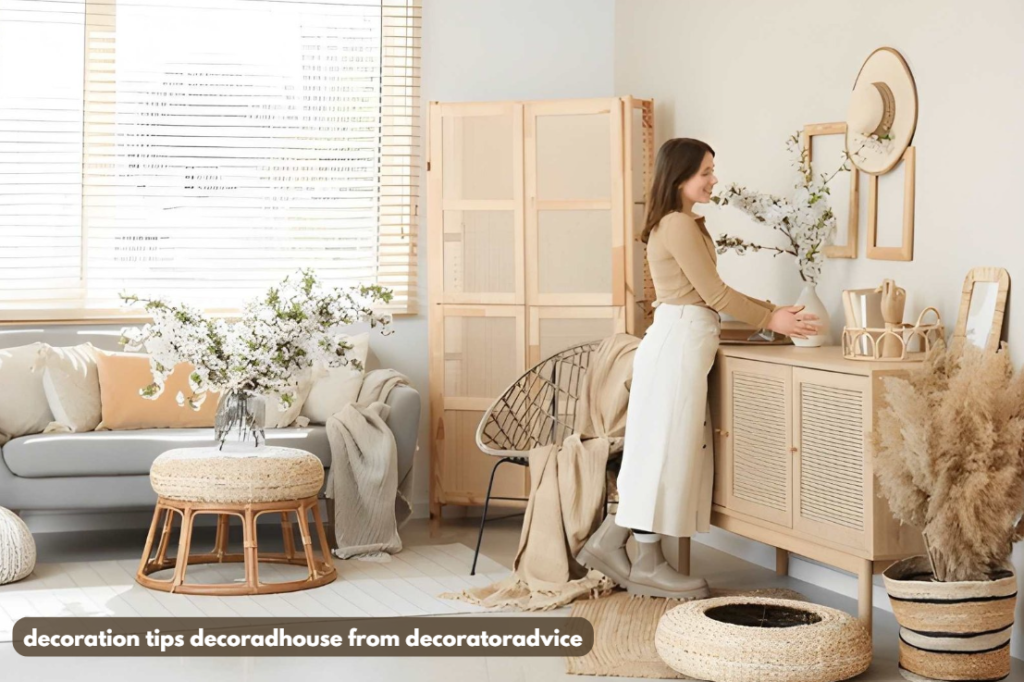
Decoration Tips Decoradhouse from Decoratoradvice focus on changes with the biggest visual payoff per dollar: layered lighting, a limited color palette, scaled furniture, and an upgraded front entrance. Start with lighting and the entry, then work inward one room at a time.
Key Takeaways
- Three layers of light (ambient, task, and accent) make a room feel finished faster than new furniture does.
- In a small living room, a compact sofa on exposed legs and a clear 30- to 36-inch walkway add more usable space than any paint color.
- Kitchens and bedrooms work best with clear surfaces, warm light, and only the furniture the room needs.
- Front-of-house upgrades such as doors tend to return more of their cost at resale than a midrange kitchen refresh.
- Repairs come first, then lighting and color, then furniture and accessories, so each dollar builds on the last.
How Should You Start Decorating on a Budget?
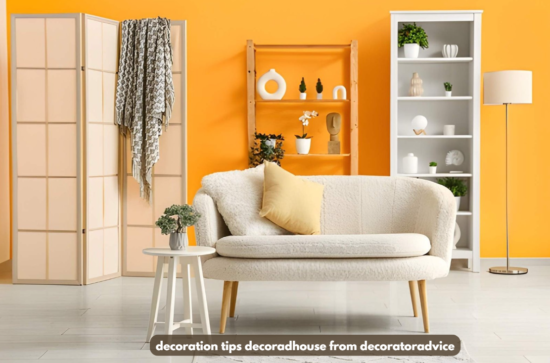
Repair first, then set lighting and color, and buy furniture last, because each stage changes what the next one needs. These renovation tips keep early spending low and prevent duplicate purchases. The best decor tips follow a fixed order:
- Fix visible flaws such as leaking faucets, cracked caulk, loose hinges, and chipped trim.
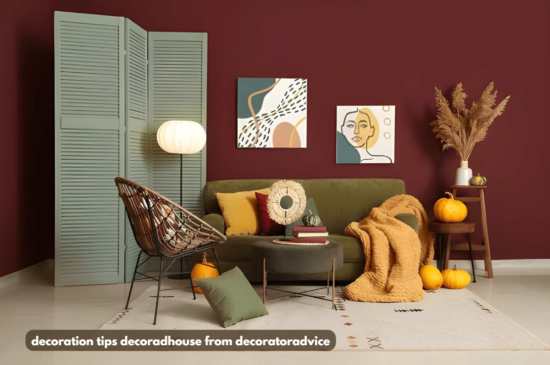
- Pick three colors: a calm main shade (white, beige, soft gray, or light brown) for about 60 percent of the room, a second shade for 30 percent, and a bold accent for the last 10 percent.
- Test paint on a small patch and check it in morning and evening light, since the same shade looks softer by day and darker at night.
- Upgrade the bulbs and add lamps so the room has all three layers of light.
- Mark the furniture layout on the floor with painter’s tape and live with it for two days before buying anything.
- Finish with rugs, curtains, plants, and art, which are the cheapest items to swap later.
Repeat one or two shades from room to room so the home flows without everything matching.
Which Decoration Tips Decoradhouse from Decoratoradvice Work Best in a Small Living Room?
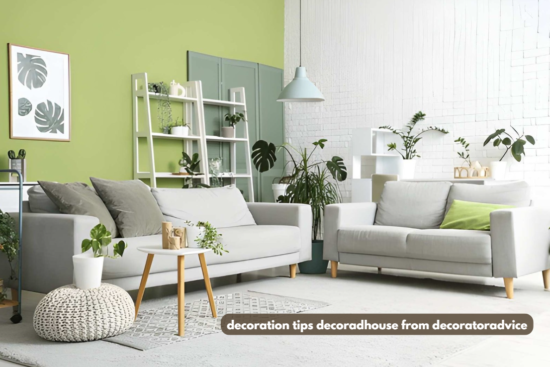
Pick a sofa near 80 inches with visible legs, keep a 30- to 36-inch walkway, and hang one large mirror opposite a window. These choices keep sight lines open and push daylight deeper into the room.
Most modern living room decor ideas for small spaces follow one rule: every piece earns two jobs, like a storage ottoman or a console that doubles as a desk. On a 14-foot wall (168 inches), an 80-inch sofa plus two 20-inch side tables uses 120 inches and leaves 48 inches for a door swing or a floor lamp. Mount the curtain rod close to the ceiling so the window reads as larger.
Pushing every piece against the walls leaves the center of the room empty. Float the sofa a few inches off the wall and divide the room into zones, such as a reading corner and a TV area. These layout tips work in any room under 200 square feet.
How Do You Light a Room So It Looks Finished?
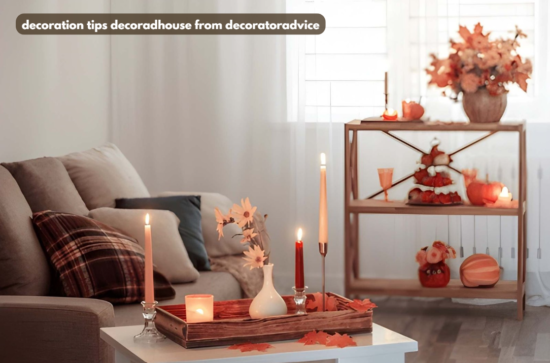
Combine three layers: ambient light for general brightness, task light where you read or cook, and accent light on art or shelves. A room lit by one ceiling fixture looks flat after sunset.
Good lightning ideas start with the bulb itself. Bulbs that earn the ENERGY STAR label draw 70 to 90 percent less power than old incandescents, and the program rates some for 25 times the lifespan, according to ENERGY STAR’s buyer’s guide. Here is the math for one bulb that runs four hours a day (1,460 hours a year):
- A 60-watt incandescent uses 87.6 kilowatt-hours a year.
- A 9-watt LED uses 13.14 kilowatt-hours a year.
That is a saving of 74.46 kilowatt-hours per bulb. At an example rate of 17 cents per kilowatt-hour, the swap saves about $12.66 per bulb per year. If all 15 bulbs in your home ran that long, that’s up to about $190 a year. Most rooms see less, so start with the bulbs you leave on longest, and check your own rate on your utility bill.
What Is the Most Common Lighting Mistake?
Mixing bulb color temperatures in one room is the most common error, because a 2700K bulb beside a 5000K bulb makes walls look patchy. Use 2700K to 3000K in living rooms and bedrooms, and reserve 4000K to 5000K for kitchens, laundry rooms, and workspaces. Place lamps at different heights so the light does not sit flat.
How Should You Arrange a Bedroom and a Kitchen?
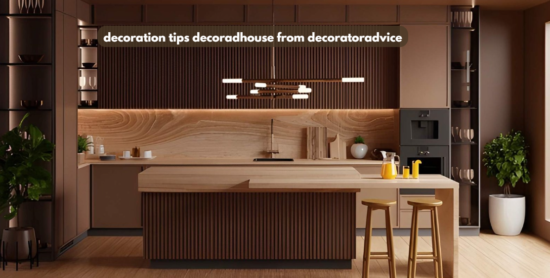
Keep bedrooms soft and sparse, and keep kitchens clear and close-knit, because both rooms are used daily and suffer most from clutter. These tips cost little and take one afternoon.
Bedroom
- Stick to a bed, a nightstand, and storage.
- Use soft textures and quiet colors.
- Choose warm, low light instead of a harsh overhead fixture.
- Keep only a few meaningful personal items.
Kitchen
- Keep the sink, stove, and fridge close together with a clear path between them.
- Give every tool a home so counters stay empty.
- Add a bright task light over work areas.
- Choose simple colors that stay clean-looking longer.
Which Home Upgrades Give the Best Return at Resale?
Exterior upgrades, especially doors, usually return more of their cost than interior remodels because buyers form their first opinion at the curb. In its 2025 Cost vs. Value Report, Remodeling magazine listed the average steel entry door replacement at $2,435, with 216.4 percent of that cost recouped at resale. That implies about $5,270 in estimated value and a gain of $2,835, or $1.16 per dollar spent. Replace the door if it is dented, drafty, or warped. If it is sound, repaint it and spend the money elsewhere. A clean, well-lit home exterior also helps a listing photograph better, so fix the door and entry before anything else on the outside.
| Project | Report year | Average cost | Cost recouped | Gain per $1 spent | Source |
| Garage door replacement | 2025 | $4,672 | 267.7% | $1.68 | Zonda Media, Remodeling 2025 Cost vs. Value Report |
| Garage door replacement | 2024 | $4,513 | 194% | $0.94 | Zonda Media, Remodeling 2024 Cost vs. Value Report |
| Midrange minor kitchen remodel | 2025 | $28,458 | 113% | $0.13 | Zonda Media, Remodeling 2025 Cost vs. Value Report |
The two garage door rows come from different report editions, so they show a year-over-year swing rather than one measurement. All three rows are modeled resale estimates, not recorded sale prices.
Rank any upgrade you are considering the same way: multiply the cost by the recoup rate, then subtract the cost. If the gain per dollar falls below $0.50, do the project for your own enjoyment rather than for resale.
Which Cheap Fixes Lift Curb Appeal Fastest?
Repainting the front door, replacing worn hardware, and adding clear house numbers plus a path light are the cheapest changes with the most visible effect. These home exterior hacks work best after pressure-washing the walkway and siding, since fresh paint over grime fails sooner. Patio decoration follows the same rule: one weather-resistant rug, two chairs, a small table, and warm outdoor lights look better than a crowded set of furniture.
How Do You Build a Garden That Needs Less Water?
Group plants by water need, choose varieties suited to your climate, and spread 2 to 3 inches of mulch over bare soil. These garden tips matter because irrigation costs scale with climate.
The EPA’s WaterSense program puts outdoor use at roughly 30 percent of household water nationwide but up to 60 percent in the driest regions. On a $100 monthly water bill, that is about $30 for a typical home and up to $60 in a desert state, so smart plant selection saves the most where water is scarcest. Water early in the morning and place the thirstiest plants nearest the hose. Two simple garden hacks save the most effort: lay a soaker hose under the mulch so water reaches the roots, and use a timer so watering never depends on memory.
When Does This Advice Not Apply?
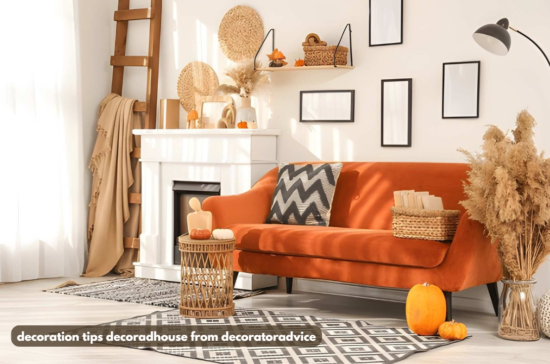
Renters and owners selling within a few months should break the usual order. Skip door and garage upgrades and use plug-in lamps, rugs, curtains, and removable hardware, which move with you. Resale-return figures are national averages, so check a local agent’s opinion on your neighborhood before spending on a project purely for sale value.
FAQ
What is the first thing to change in a small home?
Change the lighting first, because bulbs and lamps are cheap and affect how every color and surface looks. After that, clear flat surfaces so the new light has clean lines to fall on.
How many light sources does a living room need?
Aim for at least three sources at different heights, such as a ceiling fixture, a floor lamp, and a table lamp. Place them in separate corners so no area stays dark, and add a dimmer to the main fixture if the room serves for both movies and reading.
Does painting walls white make a small room look bigger?
Light, warm whites make a small room feel larger because they reflect more daylight, but pure bright white can look cold in north-facing rooms. Test two swatches on different walls for two days before committing.
Which exterior upgrade should come first?
Start with the front door and entry, since they are the first thing visitors and buyers see and cost far less than siding or windows. Add a light fixture and house numbers next to finish the entrance.
How can you refresh a home each season without spending much?
Swap cushions, throws, and small decor items, since textiles and accessories are the cheapest pieces to change. Keep furniture and wall colors steady so the home feels new without a full redesign.
Conclusion
Decoration Tips Decoradhouse from Decoratoradvice work best when applied in order: repairs, lighting, color, furniture, then accessories. Spend first where the eye lands, at the entry and in the lighting, and calculate the return before committing to any larger upgrade. A home planned this way costs less and gradually reflects how you actually live.