

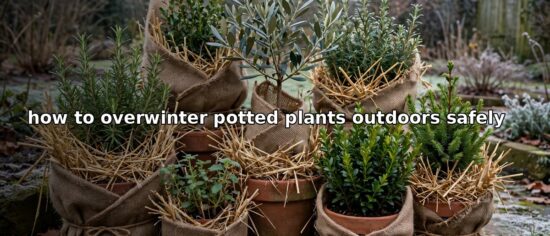
How to overwinter potted plants outdoors safely comes down to protecting the roots, not the leaves: group the pots together against a sheltered wall, wrap the pots in insulation, raise them off the ground, and water sparingly on mild days. A pot that survives winter is one whose roots never freeze solid and never sit in water.
Key Takeaways
- Pots freeze faster than garden soil, so the roots need insulation.
- Group pots together against a south-facing wall for warmth and shelter.
- Wrap pots in bubble wrap, hessian or fleece, and raise them off the ground.
- Water sparingly in winter, only on mild days when the soil is dry.
- Know each plant’s hardiness: tender plants must come indoors, hardy ones can stay out.
Why Are Potted Plants More at Risk in Winter?
A plant in the ground has the whole earth around its roots, and the soil below the frost line never freezes. A plant in a pot has only a few litres of soil, and cold attacks it from every side: top, bottom and all around. One hard frost can freeze a small pot solid, and frozen roots cannot take up water, so the plant dies of thirst even in wet soil.
Pots also hold water badly in winter. Rain fills the pot, the drainage holes clog with leaves, and the soil turns to a cold, airless sludge. Roots rot in that sludge long before spring. For wider garden ideas, Decoration Tips Decoradhouse from Decoratoradvice is a useful place to start.
Which Plants Can Stay Outdoors?
Hardiness decides everything. Hardy plants such as lavender, rosemary, box and most ornamental grasses survive winter in pots with a little protection. Half-hardy plants such as olive, bay and citrus need heavy protection or a sheltered spot. Tender plants such as pelargoniums, tender fuchsias and most houseplants will not survive a frost in a pot, and they must come indoors before the first frost.
Check the label or look up the plant’s hardiness rating before deciding. A plant that is hardy in the ground is often one zone less hardy in a pot, because the pot exposes the roots. When in doubt, give it more protection, not less. For more advice on planning what to grow, garden tips decoradhouse is worth a look.
How Do You Insulate Pots?
Insulation keeps the roots above freezing, and the simplest method is wrapping. Bubble wrap is the most effective: wrap it twice around the pot and tie it with string, covering the sides but not the drainage holes. Hessian sacking works well too, and it looks better on a patio.
Grouping is free insulation. Push the pots together in a tight group against a south-facing wall, with the largest pots on the outside and the smallest ones in the middle. The wall stores daytime heat and releases it at night, and the group shelters itself from wind.
Raise every pot off the ground on pot feet, bricks or a wooden pallet. A pot sitting flat on cold paving freezes from below and traps water underneath. Raised pots drain freely, and air moving under them stops the base freezing to the ground.
| Protection method | What it does | Best for |
|---|---|---|
| Bubble wrap around the pot | Insulates the roots from frost | All pots staying outdoors |
| Grouping against a wall | Shared warmth and wind shelter | Small and medium pots |
| Pot feet or bricks | Drainage and air under the pot | Every pot, all winter |
| Fleece over the plant | Frost protection on cold nights | Half-hardy plants |
| Moving indoors | Full protection from frost | Tender plants only |
How Should You Water Pots in Winter?
Winter watering is the opposite of summer watering: little and rarely. Plants grow slowly or not at all in winter, so they use very little water, and cold wet soil rots roots. Water only when the soil is dry an inch down, and only on a mild day when the temperature is above freezing.
Water in the morning, so the plant takes up what it needs before night falls.
Set up pots for winter in this order:
- Sort the plants into hardy, half-hardy and tender, and move tender ones indoors.
- Group the outdoor pots tightly against a south-facing wall.
- Raise every pot on feet, bricks or a pallet.
- Wrap the pots in bubble wrap or hessian, leaving drainage holes clear.
- Water sparingly, only on mild mornings when the soil is dry.
How Do You Protect the Tops of Plants?
Evergreen plants lose water through their leaves all winter, while frozen roots cannot replace it. A windbreak helps: a fence, a hedge or even a sheet of hessian on the windy side cuts the drying wind. A layer of mulch on the soil surface also helps, holding moisture and steadying the soil temperature.
On the coldest nights, cover half-hardy plants with fleece, tied loosely so air can move. Remove the fleece in the morning, so the plant does not sweat in the sun. A plant left under fleece for weeks rots, which is worse than a night of frost. For clever ways to get more from a small garden, garden hacks decoradhouse is worth a look.
What Should You Do in Early Spring?
Do not unwrap too early. A warm week in February is not spring, and a hard frost often follows it. Keep the wrapping on until the last frost has passed, and unwrap gradually: remove the fleece first, then the wrapping a week later, so the plant adjusts slowly.
Check every pot in early spring. Tip the plant out gently and look at the roots: white, firm roots are alive, while brown, mushy roots are dead. Prune dead stems back to live wood, and repot any plant whose roots have filled the pot, with fresh compost.
| Spring task | When | Why it matters |
|---|---|---|
| Remove fleece | After the last frost | Stops the plant sweating and rotting |
| Check the roots | Early spring | Finds dead roots before they spread |
| Prune dead stems | When new growth shows | Directs energy to live wood |
| Repot if needed | Early spring | Fresh compost feeds new growth |
| Start feeding | When growth is strong | Rebuilds the plant after winter |
What Are the Exceptions and Edge Cases?
- Very small pots: Pots under 20 cm across freeze solid in one night. Group them in the middle of a larger group, or move them into an unheated shed.
- Terracotta pots: Terracotta cracks when wet soil inside it freezes. Wrap them well, keep them dry, or swap to frost-proof pots for winter.
- Plants on balconies: Balconies are colder and windier than gardens, so group pots against the building wall and add extra wrapping.
- Herbs in pots: Rosemary and thyme survive winter outdoors with protection, but basil and tender herbs must come indoors before the first frost. For more garden planning ideas, decoradhouse garden tips by decoratoradvice can help you plan the work.
Frequently Asked Questions
Should I bring all my potted plants indoors for winter?
No. Hardy plants survive outdoors with insulation and grouping. Only tender plants need to come indoors, and half-hardy plants need heavy protection or a sheltered spot.
How do I stop terracotta pots cracking in frost?
Wrap the pot well, keep the soil on the dry side, and raise it off the ground. Wet soil freezing inside terracotta is what cracks it.
How often should I water potted plants in winter?
Rarely. Water only when the soil is dry an inch down, and only on a mild morning above freezing. Overwatering kills more winter pots than cold does.
Is bubble wrap safe for wrapping pots?
Yes, it is the most effective pot insulation. Wrap it twice around the sides and tie it, but leave the drainage holes clear so water can escape.
Should I cover plants with fleece all winter?
No. Use fleece only on the coldest nights, and remove it in the morning. A plant left under fleece for weeks sweats and rots.
When should I unwrap pots in spring?
After the last frost has passed. Unwrap gradually, fleece first and pot wrapping a week later, so the plant adjusts to the change slowly.
Conclusion
Overwintering potted plants outdoors is a job of protection, not care: sort the tender from the hardy, group the pots against a warm wall, wrap them against frost, raise them off the ground, and water only when the soil is dry. Done that way, the pots that look lifeless in January wake up healthy in spring, and the garden starts the new season with its plants already in place. Once you know how to overwinter potted plants outdoors safely, winter becomes a quiet season for the garden, not a season of losses.