

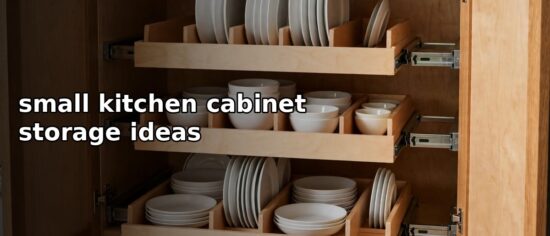
Small kitchen cabinet storage ideas work best when every cabinet is fitted to what it actually holds, from pull-out trays for pots to door racks for lids. The goal is not more cabinets, but cabinets you can reach into without kneeling, digging, or moving five things to find one.
Key Takeaways
- Measure the inside of every cabinet, including depth and hinge clearance, before buying any insert.
- Pull-out trays and deep drawers beat fixed shelves, because you can reach the back.
- The inside of a cabinet door is free storage for lids, spices, and cleaning supplies.
- Give each cabinet one job, and keep the things used together in the same cabinet.
- Corners need purpose-built hardware, or they will stay the least used space in the kitchen.
How Do You Start Organizing Small Kitchen Cabinets?
Empty one cabinet at a time. Sort what comes out into three groups: used weekly, used monthly, and not used in the past year. The weekly group earns the easy spots.
Then measure before you shop: many small kitchen cabinet storage ideas fail when an insert is half an inch too wide or a tray hits a hinge. Measure the inside width, depth, and height of each cabinet, and take the numbers with you. For broader inspiration, browse decoration tips decoradhouse.
Follow this order for each cabinet:
- Give it one job. Pots in one, dry goods in another, cleaning supplies in a third.
- Put daily items at hand height.
- Move rare items up or out.
- Add one insert at a time, and live with it a week before buying the next.
- Label the inside of the door, so the system lasts.
What Pull-Outs Actually Work in a Small Kitchen?
Pull-out trays are the most useful upgrade for base cabinets. A fixed deep shelf hides everything behind the front row, so items at the back are forgotten until they expire. A full-extension tray brings the whole shelf to you.
Deep drawers beat doors and shelves for heavy items. A wide, deep drawer holds a stack of pots with their lids beside them, and you can lift a pot straight out instead of dragging it over a shelf edge. Narrow pull-outs solve the awkward gaps small kitchens always have: a slim pull-out beside the cooktop, even six inches wide, holds oils and spices upright where you can see every label. For more background on upgrading cabinet interiors, see decoradhouse upgrade tips by decoratoradvice.
| Pull-out type | Effort | Best for |
|---|---|---|
| Full-extension tray | Low | Pots, pans |
| Deep drawer | Medium | Heavy cookware, bowls |
| Spice pull-out | Medium | Oils, sauces, spices |
| Trash pull-out | Low | Trash, recycling |
| Corner pull-out | High | Corner cabinets |
How Do Dividers and Shelf Risers Double Usable Space?
Dividers turn a wide, empty shelf into separate bays, and that separation stops stacks from sliding into each other. Vertical dividers hold baking sheets, cutting boards, and lids upright like books, so you can pull one out without the stack collapsing. Adjustable dividers are worth the small extra cost, since you can move them later.
Shelf risers add a second level inside a cabinet without any tools. A simple riser lifts mugs, bowls, or spice jars so you can use the air above a short stack, and it makes the back row visible. They work best in upper cabinets, where the weight is light. Avoid tall, wobbly risers for heavy items like cast iron.
What Should Go on the Inside of Cabinet Doors?
Cabinet doors are the most overlooked storage surface in a small kitchen, and they cost nothing to use. A slim rack mounted inside a door holds pot lids, spice jars, or measuring cups, and keeps those small items out of drawers where they tangle.
Under the sink, the door is the best place for the things you grab while cleaning. A small caddy holds sponges, gloves, and scrub brushes, while the floor stays free for bottles and the bin. Keep anything that could leak in a shallow tray on the floor, never on a door rack. Keep door storage light: heavy items strain hinges, and a sagging door will not close.
How Do You Fix a Dead Corner Cabinet?
A blind corner is deep, dark, and hard to reach, so it becomes a graveyard for forgotten pans. The fix depends on the corner type.
A lazy Susan is the simplest answer for a diagonal corner with a wide door: two rotating trays spin the back to the front, and they suit dry goods and cans.
A blind-corner pull-out suits a true blind corner, where the door opens on one side and the cabinet runs deep into the wall. It swings out in two stages, bringing the back into the open, and turns a cabinet you avoid into one you use.
If new hardware is out of reach, put a sturdy bin on a small rolling tray at the front of the corner, and store only one category there, such as baking supplies. Among all small kitchen cabinet storage ideas, the corner fix matters most, because a dead corner wastes the most space in many small kitchens.
What Fits in a Toe-Kick Drawer, and What Does Not?
The toe-kick is the recessed strip at the bottom of base cabinets, hiding a shallow drawer most kitchens never use. Only a few inches tall, it suits flat, light items: baking sheets, cutting boards, placemats, and serving trays.
It does not suit heavy or wet items. Cast iron, stacks of plates, and anything that could leak should stay in a proper cabinet, because a shallow drawer has a low weight limit.
Before ordering one, check the depth of your toe-kick and whether plumbing or ducting runs behind it.
Where Does Everything Go? A Cabinet-by-Cabinet Map
Once the hardware is sorted, decide what lives where. The table below maps cabinet types to the items that suit them, so each cabinet has one clear job. For visual ideas, take a look at decor tips decoradhouse.
| Cabinet type | Best items | Best insert |
|---|---|---|
| By the cooktop | Pots, pans, oils | Deep drawer, pull-out tray |
| By the sink | Cleaning supplies, trash bin | Door rack, pull-out bin |
| Upper, by prep zone | Plates, bowls, glasses | Shelf riser |
| Tall pantry | Dry goods, cans, appliances | Pull-out trays |
| Corner | Baking supplies, bulky pans | Lazy Susan, corner pull-out |
| Narrow filler | Spices, oils, wraps | Slim vertical pull-out |
| Toe-kick drawer | Baking sheets, linens | Shallow drawer, dividers |
Keep the map realistic for how you actually cook. If you bake every weekend, baking supplies earn a cabinet near the oven; if you rarely bake, they belong on a high shelf.
Exceptions and Edge Cases
- Rentals: Use no-drill inserts and freestanding risers, and get written permission before screwing anything into cabinets.
- Very shallow cabinets: Skip deep pull-outs and use door racks and slim risers, since standard-depth hardware will not fit.
- Frameless cabinets: Check hinge and slide clearance, since frameless boxes have less room around the opening.
- Sink base cabinets: Keep pipes clear, use a tray under anything that could leak, and never block shut-off valves.
- Heavy items: Keep cast iron and full stacks of plates low, in deep drawers or on the lowest shelf.
- Homes with small children: Put cleaning supplies and sharp tools high up or behind a child lock.
Frequently Asked Questions
How can I add storage to kitchen cabinets without renovating?
Use inserts instead of new cabinets. Pull-out trays, risers, dividers, and door racks fit inside the boxes you already own.
Are pull-out shelves worth it in a small kitchen?
Yes, for base cabinets especially. A pull-out tray brings the back of a deep shelf to you.
What is the best way to store pots and lids in a small cabinet?
Store pots in a deep drawer or on a pull-out tray, and keep lids upright in a divider or on a door rack.
How do I use the corner cabinet in my kitchen?
Fit a lazy Susan for a diagonal corner, or a blind-corner pull-out for a true blind corner.
Can I add a toe-kick drawer to existing cabinets?
Often yes, if the toe-kick is deep enough and no pipes run behind it. It suits flat, light items like baking sheets and linens.
How do I keep small kitchen cabinets organized long term?
Give every cabinet one job, label the inside of the door, and return items to their fixed spot after each use.
Conclusion
A small kitchen does not need more cabinets, it needs cabinets that work harder. Measure first, add pull-outs and dividers where they help, use the doors and corners, and give every cabinet one clear job. The best small kitchen cabinet storage ideas are the ones that fit your cooking habits and survive daily use. For more ideas across the rest of the home, browse decoradhouse.