

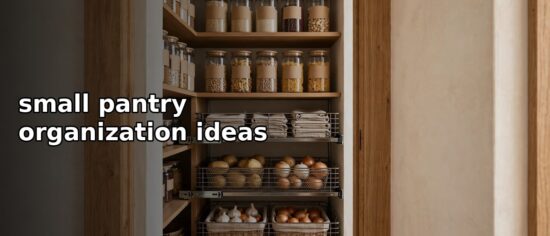
Small pantry organization ideas work best when the space is measured first, daily foods sit at the front, and pull-outs, door racks, and slim bins bring the back of a deep shelf within reach. Narrow zones, vertical storage, and renter-friendly fittings let a tiny pantry hold a week of cooking.
Key Takeaways
- Measure width, depth, and shelf spacing first: small pantries vary by inches, and standard sizes often do not fit.
- Zone by shelf and by depth: daily foods in front at eye level, backup stock behind or above.
- Use pull-outs and door racks to reach the back of deep shelves.
- Choose slim, stackable bins and use each shelf’s full height with risers and under-shelf baskets.
- Pick removable, no-drill fittings if you rent, and keep heavy items low.
How Do You Measure a Small Pantry Before Buying Anything?
Most small pantry organization ideas fail at the shop, not at home: a bin comes back half an inch too wide, or a pull-out drawer jams against the door frame. Measure the inside of the space, not the door opening:
- Measure the inside width at top, middle, and bottom; the narrowest point decides what fits.
- Measure the depth from the shelf front to the back wall, noting pipes, vents, or sloping walls.
- Measure the height between each pair of shelves, since spacing often varies.
- Check the door swing and inside clearance, so a rack fitted there does not hit a shelf.
- Note anything blocking a sliding fitting, such as brackets, hinges, or a light fixture.
Write the smallest width, shallowest depth, and lowest shelf gap on a card and take it shopping.
How Should You Zone a Small Pantry?
A small pantry cannot hold a zone for every food type, so zones must be narrow and do double duty. Think in shelves first, then in depth: one shelf for breakfast, the next for dinner staples, the next for snacks, each split into a front row for daily items and a back row for backup stock.
Put daily foods at eye level and in front: coffee, tea, cereal, cooking oil, and snacks. Weekly foods go a shelf above or below, backup stock goes highest or at the back, and heavy items belong low. The door is its own zone, best for small, flat things such as spice jars and sauce packets. If the pantry opens onto the kitchen, how it looks matters too, and these decoration tips decoradhouse show how storage and style can work together.
What Shelving Works Best in Narrow Pantries?
Fixed shelves cause the most trouble in a narrow pantry: one tall gap wastes space above short cans, while another is too low for a cereal box. Adjustable shelves solve this: moving a shelf a few inches can add a whole row of cans. If your shelves cannot move, a stackable shelf or tiered riser creates a second level inside the gap.
Shallow shelves suit a narrow pantry better than deep ones: a shelf around ten to twelve inches deep lets you reach everything in one row, while a deeper shelf needs a pull-out or riser.
| Storage option | Fits | Best for | Watch out for |
|---|---|---|---|
| Slim pull-out | 10–12 in | Cans and jars | Needs slide clearance |
| Tiered riser | 10–12 in | Cans, small jars | Poor under tall bottles |
| Stackable bins | 12 in or more | Snacks, pouches | Lids add height |
| Over-door rack | Any door | Spices, small jars | Check weight, swing |
| Under-shelf basket | Standard shelf | Packets, wraps | Cuts headroom |
How Do Pull-Outs and Door Racks Solve Deep Pantry Problems?
A deep pantry fails in one way: the back row disappears. Food gets pushed behind the front row, forgotten, and found months later. Pull-outs fix this by moving the back row to you: a full-extension drawer or sliding basket lets you see everything at once. Measure the drawer against the door frame: a pull-out that cannot slide past it is no better than a fixed shelf.
Door racks work the same way from the other side: a rack inside the door is always in view when open, ideal for spices, small jars, and sauce packets. Check its weight limit, keep glass jars low, and leave clearance so it clears the shelves. The two work best together: pull-outs for deep shelves, a door rack for small items. If you are ready to change the shelves themselves, these decoradhouse renovation tips from decoratoradvice cover small kitchen storage changes worth planning first.
Which Bins and Vertical Storage Fit a Tiny Pantry?
The best small pantry organization ideas for tiny spaces treat height as free space: food sits in a single layer while inches of air sit above it. A tiered riser lifts the back row of cans, an under-shelf basket adds room below a shelf, and a stackable bin turns one layer of snacks into two.
Choose bins by the pantry, not by the set: slim rectangular bins fit narrow shelves better than round ones. Pick one bin per group, label it on the front and side so you can read it when stacked, and keep the label broad, such as “Snacks” or “Baking.” Once the bins are in place, a few decor tips decoradhouse can help the pantry look as tidy as it works. Keep heavy bins low and stack only two high.
| Pantry shape | Typical fit | Layout that works | Avoid |
|---|---|---|---|
| Narrow reach-in | About 12 in | Slim bins, door rack | Deep baskets |
| Deep reach-in | About 24 in | Pull-outs, front/back zones | Loose items at back |
| Single cabinet | One door | One group per shelf | Bulky packs at door |
What Are the Best Renter-Friendly Options for a Small Pantry?
Renters can get most of the benefit of a fitted pantry without drilling a hole. Over-door racks hang on the door and lift off when you move, while freestanding stackable shelves and tiered risers sit on existing shelves. Tension rods across a shelf can hold wraps or small bottles upright, and removable hooks inside the door can hold measuring cups.
Check the weight limit on anything that hangs or sticks: a hook that holds a light basket may not hold a jar of sauce. Keep adhesive hooks for light items only. If a change needs screws, ask the landlord before drilling. More renter-friendly room ideas are collected under decoradhouse.
Exceptions and Edge Cases
Not every small pantry can follow the same plan. A pantry with no door has no door rack, so small items need a slim bin on the top shelf. A shared open-shelf pantry may need solid bins rather than clear ones. Where someone has a food allergy, one labelled slim bin can hold the allergen-free foods, but it needs its own fixed shelf. Pantries under ten inches deep cannot take most pull-outs, so shallow bins and a door rack carry the system there. Where reaching high or low is difficult, keep daily foods between waist and shoulder height. In a damp kitchen, sealed bins matter more than open baskets.
Frequently Asked Questions
What are the best small pantry organization ideas for renters?
Over-door racks, freestanding stackable shelves, tiered risers, and tension rods, all without drilling. Keep heavy items on fixed shelves.
How deep should pantry shelves be in a small pantry?
Around ten to twelve inches deep, keeping everything within reach in one row. Deeper shelves need pull-outs or a riser.
How do I organize a deep pantry so nothing gets lost at the back?
Use pull-out drawers or sliding baskets so the back row comes to you, and keep one group per shelf.
How do I organize a small pantry without drilling or permanent shelves?
Use freestanding risers, stackable bins, over-door racks, and tension rods. Measure first, since removable fittings come in fixed sizes.
How much clearance do pull-out drawers need in a narrow pantry?
Enough room to slide fully past the door frame, plus a small gap on each side.
What should I keep on the pantry door?
Small, flat, light items such as spice jars, sauce packets, and wraps. Check the rack’s weight limit first, and keep glass jars low.
Conclusion
A small pantry does not need more space; it needs measurements, narrow zones, and fittings that bring the back row within reach. Start by measuring, add one pull-out or door rack where the pantry is deepest, and let slim bins do the rest. These small pantry organization ideas turn a cramped cupboard into a kitchen that is easy to cook from.