

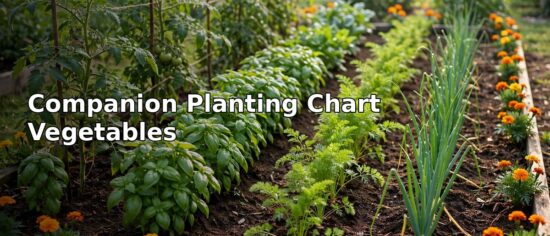
A companion planting chart vegetables growers use pairs vegetables that help each other grow, so you can plan beds where good neighbours share space and bad neighbours stay apart. Check the chart before sowing, group plants by what they need, and leave room for the pairs to do their work.
Key Takeaways
- Pair vegetables that help each other: some share nutrients, others confuse pests.
- Keep bad neighbours apart, even if they look good side by side.
- Plan the whole bed on paper before sowing a single seed.
- Rotate pairs each year so the soil does not tire.
- Herbs and flowers count as companions too, not just vegetables.
What Is Companion Planting?
Companion planting means growing two or more plants together because they help each other. One plant may shade the soil for another, fix nitrogen that its neighbour uses, or release a scent that confuses a pest.
Gardeners have used these pairings for generations, long before anyone drew them up as a chart. The chart simply collects what works into one place, so you do not have to remember every pairing. For wider garden ideas, decoration tips decoradhouse is a useful place to start.
A companion planting chart vegetables plan is not a rulebook. It is a guide based on what gardeners observe year after year: some combinations grow better together, some grow worse, and most are neutral. It does not replace good soil, watering and sunlight, but it makes those basics work harder.
How Do You Read a Companion Planting Chart?
A companion planting chart usually lists each vegetable with two columns: good companions and bad neighbours. Find your vegetable in the first column, then read across. The good companions are safe to plant beside it, and the bad neighbours should go in a different bed.
Some charts add a third column for the reason, such as basil improving tomato flavour or onions stunting beans. The reason matters, because it tells you whether the pairing is strong or mild.
Use the chart in this order:
- List the vegetables you want to grow this season, in order of importance.
- Check each one on the chart and note its good companions and bad neighbours.
- Group the good pairs together into beds, keeping bad neighbours in separate beds.
- Add herbs and flowers that help the whole bed, such as basil, marigolds or nasturtiums.
- Draw the bed on paper with spacing, so you can see the pairs before you sow.
Work through the list before buying seeds. It is much easier to change a plan on paper than to move seedlings once they are in the ground.
Which Vegetable Pairs Work Best Together?
Some pairings are famous because they work so reliably. Tomatoes and basil are the classic example: basil is said to improve tomato flavour. Carrots and onions are another strong pair, because onion scent confuses the carrot fly while carrot scent confuses the onion fly.
Beans and corn are a traditional pairing too. Beans fix nitrogen in the soil, which corn uses heavily, and corn stalks give climbing beans something to grow up. Add squash underneath and you have the old three sisters planting: corn for height, beans for nitrogen, squash for ground cover that keeps the soil moist.
Cabbage family vegetables do well with aromatic herbs such as rosemary, sage and thyme, which can mask the smell that attracts cabbage white butterflies. Lettuce grows well under taller plants like tomatoes, which give it the light shade it prefers in hot weather.
| Vegetable | Good companions | Why it works |
|---|---|---|
| Tomatoes | Basil, carrots, onions, parsley | Basil may improve flavour; onions and carrots use different soil levels |
| Carrots | Onions, leeks, rosemary, peas | Onion scent confuses carrot fly; peas add nitrogen |
| Beans | Corn, squash, cucumbers, radishes | Beans fix nitrogen; corn gives support; radishes mark rows |
| Cabbage family | Rosemary, sage, thyme, onions | Aromatic herbs mask the scent that attracts cabbage white |
| Cucumbers | Beans, corn, peas, radishes | Beans add nitrogen; corn gives shade; radishes deter cucumber beetles |
| Lettuce | Carrots, radishes, strawberries, tomatoes | Grows in light shade of taller plants; shallow roots do not compete |
Which Bad Neighbours Should You Keep Apart?
Bad neighbours are pairs that compete for the same nutrients, attract the same pests, or release chemicals that slow each other down. Onions and beans are a well-known bad pair: onions can stunt bean growth. Garlic has the same effect on beans and peas, so keep alliums away from legumes.
Cabbage and strawberries also clash, because they compete heavily for nutrients, and the cabbage tends to win. Carrots and dill are a poor pair too, since dill can stunt carrot growth if planted too close.
| Pair to avoid | What goes wrong | What to do instead |
|---|---|---|
| Onions and beans | Onions stunt bean growth | Plant beans with corn or squash |
| Tomatoes and potatoes | Shared blight spreads fast | Keep in separate beds, rotate yearly |
| Fennel and most vegetables | Fennel slows nearby growth | Give fennel its own pot or corner |
| Cabbage and strawberries | Heavy competition for nutrients | Plant strawberries with lettuce or onions |
| Carrots and dill | Dill can stunt carrots | Plant dill far from the carrot bed |
| Garlic and peas | Garlic slows pea growth | Plant peas with carrots or cucumbers |
How Do You Plan a Bed With the Chart?
Start with the bed, not the chart. Measure the bed, note how much sun it gets, and decide what you want to grow most. Then use the chart to build pairs around that main crop. If tomatoes are your priority, check their good companions first and fill the bed with basil, carrots and onions around them.
Give each plant the space it needs. A chart tells you which plants go together, not how far apart to sow them, so follow the spacing on the seed packet.
Plan for succession too. When an early crop finishes, such as spring lettuce, sow a second crop in the same space, checking the chart again for the new crop, because its companions may differ.
Keep a simple record each year: what you planted, where, and how it grew. After two or three seasons you will have your own chart, based on your soil and climate, which is worth more than any printed one. For more ways to get the most from small beds, decoradhouse garden tips by decoratoradvice offers practical ideas. For clever ways to fit more into small spaces, garden hacks decoradhouse is worth a look.
What Are the Exceptions and Edge Cases?
- Small beds: If you only have one bed, you cannot separate every bad pair. Prioritise the strongest warnings, such as fennel and tomatoes with potatoes, and accept the mild ones. For more planning ideas, garden tips decoradhouse is worth a look.
- Containers: Companion planting works in pots too, but pairs must share a large container. Two plants in one small pot will compete, however good their pairing is on paper.
- New soil: In very rich soil, competition matters less, because nutrients are plentiful. In poor soil, bad neighbours cause more harm, so the chart matters more.
- Pest pressure: If a pest is already common in your area, a companion that repels it is worth more than a pairing that only shares nutrients.
- Climate: Some pairings work well in cool climates and poorly in hot ones. Lettuce under tomatoes helps in summer heat but shades too much in a cool spring.
Frequently Asked Questions
What is a companion planting chart?
It is a table that lists each vegetable with its good companions and bad neighbours.
Do companion planting charts really work?
They collect what gardeners have observed over many seasons. The pairings help, but they do not replace good soil, watering, sunlight and spacing.
Can I plant tomatoes and basil together?
Yes, it is one of the best-known pairs. Basil may improve tomato flavour and help keep aphids away, and both like the same sunny spot.
Why should onions and beans not grow together?
Onions can stunt the growth of beans and peas. Keep alliums in a different bed from legumes.
Does companion planting work in containers?
Yes, if the container is large enough for both plants. Two plants crowded into a small pot will compete for water and nutrients, however good their pairing is.
Should I still rotate crops if I use companion planting?
Yes. Companion planting and rotation work together: rotate the whole bed each year so the same family does not grow in the same soil twice running.
Conclusion
Choose your main crops, check their good companions and bad neighbours, group the pairs into beds, and keep a record of what worked. Over a few seasons your own notes will matter as much as any printed chart. Let a companion planting chart vegetables guide help your vegetables grow better together.