
A large blank living room wall needs decor sized to at least 60–75% of the furniture beneath it, layered across two or more elements rather than one small piece. Gallery walls, oversized art, layered shelving, and textiles all solve the problem differently depending on ceiling height and budget.
Key Takeaways
- Art should span 60–75% of the width of the furniture placed below it.
- Ceilings above 8 feet require added height or a second layering element to avoid a “floating” look.
- The single most common sizing error is hanging art roughly 15–20% smaller than the wall calls for.
- Homes built after 2000 average taller ceilings than pre-1990 construction, which changes proportion math.
- Gallery walls and layered shelving cost less than one oversized custom piece and fill space more evenly.
Filling a large, blank wall is one of the most common decorating challenges. Living room wall decor ideas for large walls often fail not because of bad taste, but because the art or arrangement is too small for the wall. This guide offers a simple formula for getting the proportions right.
Understanding Large Wall Proportions Before You Decorate
What Counts as a “Large” Living Room Wall?
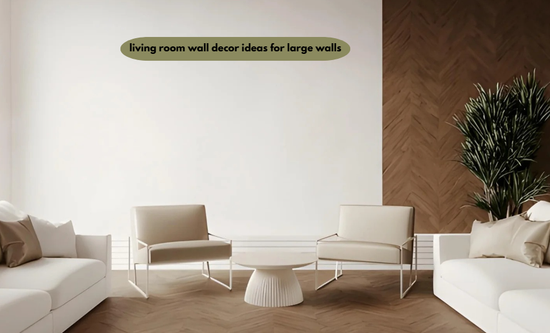
A wall qualifies as large when it exceeds roughly 10 linear feet or extends above a standard 8-foot ceiling line without furniture, windows, or doors breaking up the surface. Most sofa-backed walls in American living rooms fall into this category once the sofa is under 84 inches wide, leaving significant empty space on either side.
Open floor plans and 9-to-10-foot or vaulted ceilings make the issue more noticeable because the vertical space above furniture increases. A wall that feels balanced with an 8-foot ceiling can look sparse with the same furniture under a 10-foot ceiling.
The Wall-to-Art Ratio Formula for Different Ceiling Heights
Art width should equal 60–75% of the furniture width directly below it, and on ceilings above 8 feet, add 8–10 inches of height or a second visual layer for every additional foot of ceiling. This adjustment prevents the “floating art” effect common in taller rooms.
For an 8-foot ceiling with a 90-inch sofa, art 54–68 inches wide feels balanced. For a 9-foot ceiling, use art 8–10 inches taller or add a shelf, sconce, or plant above it. On a 10-foot ceiling, two layers can prevent dead space, making these upgrade tips by decoratoradvice useful for taller walls.
The Most Common Sizing Mistake on Large Walls
The most frequent error is hanging art sized for an 8-foot ceiling in a room with a 9-or-10-foot ceiling, leaving the piece roughly 15–20% smaller than the wall requires. This happens because most retail art sizing charts default to 8-foot proportions, which no longer match a growing share of American living rooms.
According to historical builder trends and building code developments noted by the National Association of Home Builders (NAHB), average ceiling heights in U.S. residential construction have progressively shifted from the post-war 8-foot baseline to a 9- or 10-foot baseline in modern homes.
Charts based on 8-foot walls can undersize art for taller ceilings, making pieces look too small despite fitting the measurements. These measurements can help guide practical decor tips when choosing wall art for newer homes.
Old vs. New Construction: How Blank Wall Proportions Differ
Homes built before 1990 typically have 8-foot ceilings and shorter wall spans, while homes built after 2000 average taller ceilings that create larger blank zones above furniture. The formula for filling those walls has to shift with the era of the house, not just its square footage.
In pre-1990 homes, a single medium art piece often fills the wall above a sofa because ceiling height is limited. In newer homes, the same piece can leave a visible gap, making gallery walls, extended shelving, or stacked arrangements more effective. This distinction matters when comparing online renovation tips since advice for one ceiling height may need adjustment for another.
Rooms with crown molding, wainscoting, or strong horizontal trim are an exception. These features break up vertical space, so smaller art can often work without making the wall feel empty.
Living Room Wall Decor Ideas for Large Walls
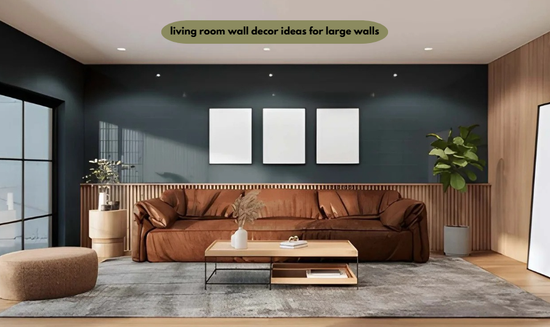
1. Gallery Wall Layouts
A gallery wall fills large blank space by combining multiple frames of varying sizes into one arrangement that reads as a single visual block covering 60% or more of the available wall. This approach solves the proportion problem without requiring one expensive oversized piece.
Effective gallery layouts group 6 to 12 frames with at least 2–3 inches of spacing between each, anchored by one larger central piece. This is one of the most requested decoration tips for large walls because it scales easily: adding one or two frames later adjusts the coverage without redesigning the whole arrangement.
2. Oversized Statement Art
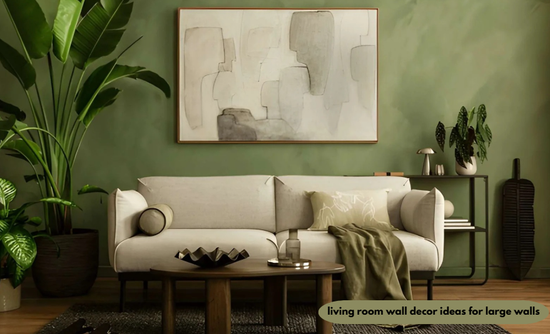
A single oversized canvas or framed print sized to at least two-thirds of the wall’s width delivers the strongest visual impact but comes with the highest per-square-foot cost of any large-wall option. It works best on walls without competing architectural detail.
Custom or large-format printing services typically produce pieces up to 60 x 90 inches, which covers most standard large-wall spans in a single unit. This option suits buyers who want one focal point rather than a composed arrangement.
3. Layered Shelving Displays
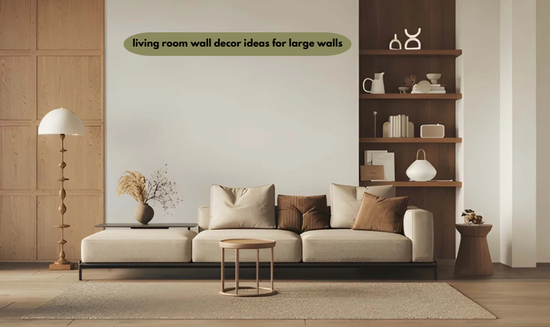
Floating shelves installed in a staggered or symmetrical pattern add depth and function to a large wall by combining books, objects, and small art into one layered display. Shelving also solves the vertical-space problem on tall ceilings without requiring oversized art.
Three to five staggered shelves spaced 10–14 inches apart add visual movement and provide practical storage, making them a useful upgrade for living rooms that need more function.
4. Woven Textiles and Tapestries
Large woven hangings, macramé panels, or fabric tapestries cover significant wall area at a lower cost per square foot than framed art or custom shelving. Texture also adds acoustic softening in rooms with hard flooring, which framed art does not provide.
A tapestry sized between 60 and 80 inches wide typically covers the same footprint as a mid-size gallery wall for a fraction of the cost, making it one of the more efficient upgrading tips for large, echo-prone rooms.
5. Mirrors and Architectural Panels
Oversized mirrors or dimensional wall panels fill large walls while reflecting light, which makes them especially effective in living rooms with limited natural light. Panels also add texture without the maintenance concerns of framed glass art.
A mirror sized to roughly 40 x 60 inches or larger, centered on the wall, visually doubles the perceived depth of the room in addition to closing the empty-space gap.
Comparison of Large-Wall Decor Options
| Decor Type | Best Ceiling Height | Approx. Cost Range (USD) | Installation Difficulty | Best For |
| Gallery Wall | 8–10 ft | $150–$600 | Moderate | Flexible, evolving displays |
| Oversized Statement Art | 8–9 ft, minimal trim | $300–$1,500+ | Easy–Moderate | Single strong focal point |
| Layered Shelving | 9–10 ft | $100–$500 | Moderate | Function plus display |
| Woven Textile/Tapestry | 8–10 ft | $50–$300 | Easy | Budget-conscious texture |
| Oversized Mirror/Panel | 8–10 ft | $150–$800 | Moderate | Low-light rooms |
What Is a Focal Wall?
A focal wall is the single wall in a room designed to draw the eye first, typically through color, texture, or a dominant decor arrangement, while the remaining walls stay visually secondary.
Budget and Renovation-Smart Approaches
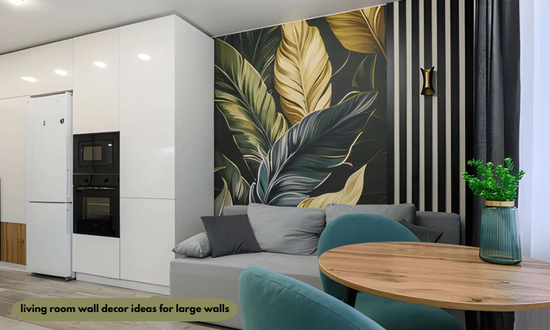
Filling a large wall without a full renovation budget works best by combining low-cost textiles or shelving with one mid-priced anchor piece rather than buying several expensive items. This layered spending approach covers more square footage per dollar than a single large purchase.
Small living room decorating ideas on a budget use the same proportion math as larger rooms: cover 60–75% of the furniture width, then add texture or shelving instead of another large art piece. For rentals, use temporary hanging systems instead of drilling.
Frequently Asked Questions
What is the best thing to put on a large blank wall in a living room?
A gallery wall or layered floating shelves provide the most coverage per dollar spent. Both options scale easily to fill high ceilings and wide wall spans without requiring expensive, oversized custom artwork.
How do I fill a large wall on a budget?
Combining an affordable textile or tapestry with a small collection of inexpensive framed prints covers more wall space per dollar than one expensive statement piece. Layering also allows the arrangement to expand gradually as budget allows.
Thrifted frames, printable art, and woven pieces typically cost under $300 combined while covering 60% or more of a standard sofa-width wall.
What size art do I need for a large wall?
Art should measure 60–75% of the width of the furniture placed directly below it, adjusted upward on ceilings taller than 8 feet. A 90-inch sofa calls for art between roughly 54 and 68 inches wide on a standard 8-foot ceiling.
On taller ceilings, add height or a second layering element rather than relying on width alone.
Should I hang one large piece or a gallery wall on a big wall?
A single large piece creates a stronger focal point, while a gallery wall gives you more flexibility and usually costs less to put together. The choice comes down to whether the room needs one strong visual anchor or a more layered, changing display.
Rooms with strong architectural features often suit a single piece better, since competing gallery frames can clutter an already detailed wall.
How high should I hang art on a 9-foot ceiling?
Center the art 57 to 60 inches from the floor to the middle of the piece, the same eye-level standard used for 8-foot ceilings, then add height to the piece itself rather than raising the center point. Raising the center point above standard eye level makes art look disconnected from the furniture below it.
The extra ceiling height should be absorbed by the art’s dimensions or an added layering element, not by hanging the piece higher on the wall.
What’s a common mistake when decorating large walls?
The most common mistake is sizing art for an 8-foot ceiling in a room with a taller ceiling, leaving the piece 15–20% smaller than the wall proportionally requires. This mismatch happens because most retail sizing charts are based on 8-foot walls.
Checking your ceiling height before ordering or hanging art helps you avoid this problem from the start.
Do I need matching frames for a gallery wall on a large wall?
Matching frames are not required, and mixed frame styles often look more intentional on a large wall than a uniform set. Consistency in spacing between frames matters more than consistency in frame material or color.
Grouping frames by a shared color palette rather than a shared frame style keeps the arrangement cohesive without looking mass-produced.
Conclusion
Living room wall decor ideas for large walls succeed or fail based on proportion, not price. Sizing art or arrangements to 60–75% of the furniture beneath them, adjusted for ceiling height, closes the gap that makes large walls look empty. Gallery walls, layered shelving, and textiles solve this at a lower cost than a single oversized piece, while oversized art and mirrors work best where budget allows and architectural detail is minimal.