

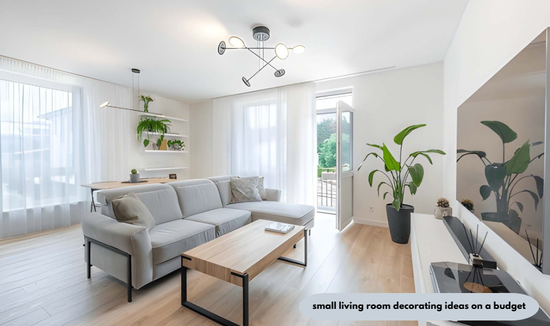
Small living room decorating ideas on a budget work best when they combine multi-functional furniture, vertical storage, and a unified light color palette instead of a full renovation. A 150-square-foot room can be refreshed for roughly $600 to $1,500, versus $4,000 to $8,000 for a mid-range professional remodel (based on 2026 home remodeling market data).
Key Takeaways
- A DIY refresh of a 150 sq ft living room costs about $4 per square foot; new budget furniture runs closer to $10 per square foot.
- Multi-functional furniture—storage ottomans, nesting tables, and daybeds—recovers floor space without adding square footage.
- Furniture pushed against every wall is the most common small-room mistake; floating one piece usually fixes it for free.
- Light, low-contrast wall colors and one large mirror expand a room visually more than several small decor items.
- Renters face different constraints than homeowners, since paint and built-in storage are often restricted by lease terms.
What Is a Small Living Room?
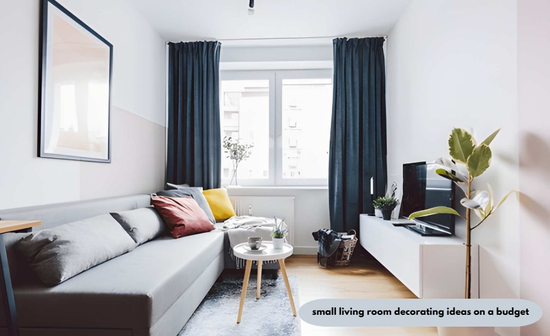
A small living room is generally a primary seating space under 200 square feet, a size common in apartments, condos, and older homes built before open-concept layouts.
The Real Cost Small Living Room Decorating Ideas on a Budget
Decorating a 150-square-foot living room on a budget costs between $4 and $10 per square foot, depending on whether furniture is refreshed or replaced. This range comes from pricing two realistic paths for the same room size against current budget-tier retail pricing. A full professional renovation of the same space costs four to twelve times more per square foot.
| Approach | Total Budget | Cost per Sq Ft (150 sq ft) | What’s Included |
| DIY & Thrift Refresh | $605 | $4.03 | Paint, refreshed secondhand furniture, lighting swap, textiles, floating shelves |
| New Budget Furniture | $1,499 | $10.00 | New compact sofa, coffee table, rug, lighting, shelving, decor accessories |
| Full Room Renovation | $4,000–$8,000 (2026 Angi Data) | $26–$53 | Built-ins, flooring, custom furniture, labor & fees |
The DIY path assumes one gallon of paint ($35), a $200 slipcover-and-hardware refresh, a $60 floor lamp, $120 in rugs and pillows, and $90 in shelving. The new-furniture path assumes a $699 compact sofa, a $150 coffee table, a $200 rug, $120 lighting, $180 shelving, and $150 decor. Neither figure includes labor.
Furniture Choices That Work in Small Living Rooms
What Size Sofa Fits a Small Living Room?
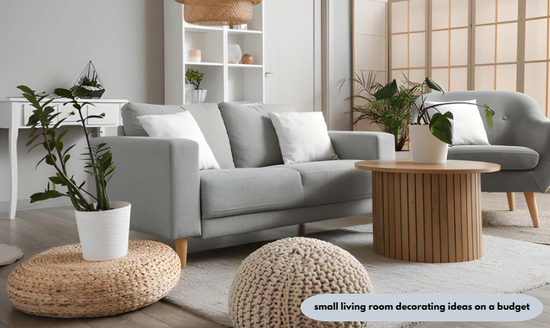
A sofa between 60 and 72 inches wide fits most small living rooms without blocking walkways or overwhelming the room’s proportions. Standard three-seat sofas run 78–84 inches, using roughly 15% more floor area than a small-space model. A 60–72 inch sofa leaves a 30-inch walkway, the minimum recommended for comfortable foot traffic.
Should You Use Multi-Functional Furniture?
Multi-functional furniture—storage ottomans, nesting tables, and daybeds—reduces total furniture footprint by combining two jobs into one piece. A storage ottoman replaces a coffee table and a drawer. A daybed replaces a sofa and a guest bed. According to Decoradhouse upgrade tips by decoratoradvice this kind of swap is one of the fastest ways to reclaim floor space without a full renovation. This matters more in small rooms because every square foot lost to circulation space can’t be recovered elsewhere.
What’s the Biggest Furniture Mistake in Small Living Rooms?
Pushing every piece of furniture against the walls is the most common small-room mistake, since it creates an awkward dead zone in the center of the room. Floating the sofa six to twelve inches off the back wall defines a seating area and makes the room read as designed, not just empty. It costs nothing.
Layout Tips to Maximize a Small Living Room
Where Should Furniture Be Placed?
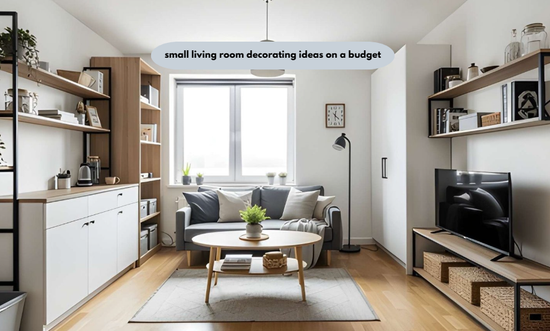
Furniture should anchor around one focal point—a window, fireplace, or TV—with the largest piece placed first and smaller pieces built around it. Placing the sofa first avoids the common error of arranging small pieces early and running out of space for seating. A rug sized to fit the front legs of every seating piece ties the layout together.
How Do You Create Zones Without Walls?
In an open layout, zones come from rugs, lighting, and furniture orientation, not walls. In a living-dining combo, try a rug under the seating area and a fixture hung over the dining table to mark it as its own space. A low console placed perpendicular to the wall can also split the room without blocking sightlines.
Budget Decor Tips for Small Spaces
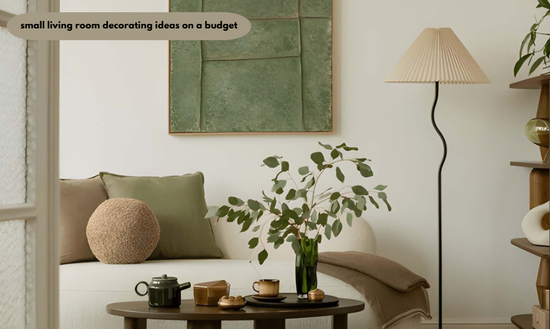
Living room decor ideas for small spaces perform best when they prioritize visual continuity over quantity. Fewer, larger items in a matched color family read as more intentional than many small mismatched pieces and cost less than buying filler decor to compensate for clutter. This aligns directly with key decoration tips decoradhouse from decoratoradvice on avoiding filler purchases in small spaces.
What Colors Make a Small Room Look Bigger?
Light, low-contrast wall colors—soft white, pale gray, and warm greige—make a small living room feel larger by reducing visual breaks between wall and ceiling. Dark accent walls can still work, but only on the wall opposite the main sightline, not the one the eye crosses first. Carrying a related tone into large furniture reduces visual clutter further.
How Can Lighting Improve a Small Living Room?
Layered lighting—a ceiling fixture, one floor lamp, and one table lamp—eliminates the harsh shadows that make small rooms feel cramped after dark. A single overhead source creates uneven corner shadows, shrinking the space visually at night. One large mirror opposite a window adds a second light source by reflecting daylight back into the room.
When These Rules Don’t Apply
Renters face constraints homeowners don’t. Many leases prohibit wall painting or require a deposit forfeiture for wall damage, ruling out the lowest-cost color change in the DIY budget above. Removable wallpaper, large framed art, and furniture color coordination replace paint in that case, typically adding $80–$150 to the DIY path.
Frequently Asked Questions
What is the cheapest way to decorate a small living room?
Refreshing existing furniture with paint, new hardware, and slipcovers costs less than replacing furniture outright. A full DIY refresh of a 150 sq ft room, including paint, textiles, and lighting, runs about $600 — roughly 60% less than new budget furniture for the same space.
How do I make my small living room look bigger without spending money?
Floating the sofa off the back wall, removing one unnecessary piece, and adding a large mirror opposite a window are free changes. Decluttering surfaces also helps, since flat, empty surfaces reflect more light than surfaces covered in small objects.
What furniture should I avoid in a small living room?
Bulky sectionals, oversized coffee tables, and furniture with solid, boxy bases block sightlines and make a small room feel more crowded than its footprint. Furniture with exposed legs lets light pass underneath, visually opening the floor even when the piece itself isn’t small.
Is an area rug necessary in a small living room?
An area rug isn’t required, but a correctly sized one—fitting at least the front legs of the main seating—visually anchors the room and makes placement look intentional. One of the most frequent errors made in tiny spaces is an undersized rug.
How much does it cost to renovate a small living room?
For a 150 sq ft living room, a full professional renovation usually runs $4,000 to $8,000, based on 2026 contractor benchmarks. A DIY or budget refresh of the same space costs $605–$1,499—saving thousands by eliminating contractor labor and custom millwork.
What’s the best layout for a small rectangular living room?
A rectangular space is kept from feeling like a hallway by positioning the largest item along the longest wall, floating slightly off of it. Angling two smaller seating pieces toward the sofa, rather than lining them up parallel, also breaks up the rectangular shape.
Do small living rooms need less furniture than large ones?
Small living rooms need fewer pieces, not smaller versions of the same number used in a large room. A large room can hold a sofa, two armchairs, a coffee table, and a console without crowding; a small room usually supports only a sofa, one chair, and one multi-functional table before circulation space disappears.
Conclusion
Small living room decorating ideas on a budget succeed when furniture, layout, and color work together instead of relying on decor to compensate for poor space planning. A 150 sq ft room refreshed with existing furniture, layered lighting, and a unified palette costs about $4–$10 per square foot—a fraction of the $20–$53 per square foot a full renovation requires. The math is simple: refresh before replacing and float furniture before adding more of it.

Pingback: 15 Coffee Table Decor Ideas for Small Living Rooms That Look Stylish Tips Decoradhouse