

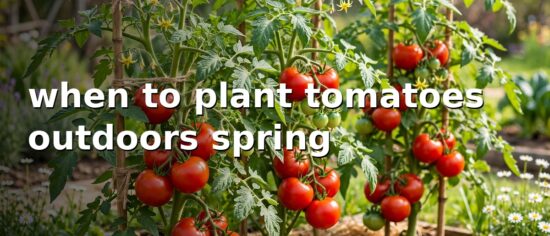
Plant tomatoes outdoors in spring only after your local frost risk has ended and the soil has warmed to about 60°F, with nights staying above 50°F. Waiting for those conditions, rather than a fixed calendar date, gives young plants a safer start and a longer growing season.
Key Takeaways
- Tomatoes are warm-season plants that frost can damage, so frost risk and soil warmth matter more than one calendar date.
- A practical target is soil around 60°F at planting depth, with night air staying above 50°F.
- Start seeds indoors about five to eight weeks before moving plants out, or buy sturdy transplants when conditions are close.
- Harden seedlings off over seven to fourteen days before they stay outside full time.
- Choose a sunny, well-drained spot, plant deeply, water thoroughly, and add support at planting time.
What Signals Show Tomatoes Are Ready to Move Outdoors?
The clearest answer is three checks together: frost risk has passed for your area, the soil is warm enough, and no sharp cold snap is forecast. One warm afternoon is not enough on its own. Cold soil can slow root growth even when the air feels pleasant, and a late frost can injure tender leaves and stems overnight.
Use a soil thermometer at planting depth on several mornings. Soil in a raised bed or container usually warms sooner than soil in a low, shaded bed, and heavy, wet soil tends to stay cool longer. If nights are still near freezing, or the soil reading is well below target, waiting a few more days is usually safer.
Good transplants help too: look for stocky plants with deep green leaves and firm stems.
How Do You Work Out Your Own Planting Window?
Start with your local average last frost date, then add a safety margin. That date is an average, not a promise, so many gardeners wait about one to two weeks beyond it before setting tomatoes out. During that wait, check soil temperature and the longer-range forecast.
Your local climate shapes the window. Warmer areas often reach safe conditions earlier in spring, while cooler areas may wait until late spring. Your county extension office or a local nursery can help with dates for your town. For ideas on shaping the wider space around your beds, decoration tips decoradhouse can sit alongside your planting plan, while timing itself should stay tied to frost and soil readings. More seasonal advice is available through decoradhouse garden tips by decoratoradvice.
| Readiness check | Go ahead when | Hold off when |
|---|---|---|
| Frost risk | Average last frost has passed; no frost forecast | Frost is still possible in coming nights |
| Soil temperature | Around 60°F at planting depth, on repeated checks | Soil is cold, wet, or well below target |
| Night air | Nights staying above 50°F | Nights falling near or below freezing |
| Seedling condition | Stocky, green, and hardened off | Leggy, pale, or never taken outside |
How Should You Harden Off Seedlings Before Planting?
Harden off seedlings by giving them short, sheltered outdoor visits first, then building up sun, wind, and time outside over seven to fourteen days. Indoor plants have soft growth that sun and wind can scorch or dry out quickly, so skipping this step often causes wilting and setback even on a warm planting day.
Begin in shade on a calm day for just an hour or two, then bring plants back inside. Over following days, lengthen visits and add morning sun, light breeze, and eventually a full day outside. If leaves wilt or bleach badly, return to shade and shorter visits for a day before trying again. Bring plants inside on freezing nights.
How Do You Plant Tomatoes Outdoors Step by Step?
Once conditions are right, plant on a calm, cloudy day or in late afternoon, when the sun is less intense. Choose a spot with about eight hours of direct sun and soil that drains well. If you can, avoid planting tomatoes where tomatoes, peppers, eggplant, or potatoes grew last year.
- Loosen the bed and mix in mature compost so soil holds moisture without staying soggy.
- Dig a hole or shallow trench deep enough to bury part of the stem, after removing the lowest leaves.
- Set the plant in so the buried stem can form extra roots, then firm soil gently around it.
- Water deeply at once so soil settles around roots and air pockets close up.
- Add a stake or cage now, before roots spread, so you do not disturb them later.
- Mulch after soil has warmed, keeping mulch a little away from the stem.
Many gardeners leave about two to three feet between plants, with wider space for large vining types. Bush types tend to stay compact and ripen fruit over a shorter period, while vining types keep growing and fruiting until cold weather stops them. For general care ideas once plants are in the ground, see garden tips decoradhouse.
| Stage | Timing relative to moving outdoors | Main task |
|---|---|---|
| Start seeds indoors | About five to eight weeks before | Bright light, warmth, and even moisture |
| Pot up seedlings | When true leaves appear | Move to larger pots for root growth |
| Harden off | Final seven to fourteen days | Build up sun, wind, and time outside |
| Transplant outdoors | After frost risk ends; soil about 60°F | Plant deeply, water well, add support |
| Early care | First few weeks after planting | Water evenly; mulch once soil is warm |
What If Conditions Are Unusual or Planting Runs Late?
Unusual springs call for flexible timing, not a fixed rule. If a warm spell arrives early, check soil temperature and the forecast before trusting it, because late frost can still follow. If frost threatens after planting, cover plants in the evening with fabric row cover or a breathable sheet, and remove it in the morning once temperatures rise.
Containers are one exception: pots warm faster and can be moved to shelter, so container tomatoes may go out a little sooner. The trade-off is that pots also cool faster at night and dry out sooner, so keep them where you can pull them inside during a cold snap. Cold frames can add protection, but vent them on warm days.
Late planting is not always a lost season. Choose a quicker-maturing variety, buy a larger healthy transplant, and check that it has time to ripen before your expected first fall frost. Small-fruited types often ripen sooner, which helps in a short season. In very hot areas, intense summer heat can slow fruit setting, so afternoon shade may matter most. Simple timing tricks like these are the kind of garden hacks decoradhouse readers often look for when a season does not follow the usual pattern.
Frequently Asked Questions
Can I plant tomato seeds directly outdoors in spring?
You can in a long, warm season, but transplants are safer in most areas. Direct-sown plants start later, face more pest and weather risk while small, and may run out of warm days before fruit ripens.
What happens if I plant tomatoes too early?
Early plants may survive but grow slowly in cold soil, and frost can damage or kill them. Cold stress can set plants back for weeks, so an early start does not always lead to an earlier harvest.
How warm should nights be before planting tomatoes outside?
Aim for nights staying above 50°F, with no frost forecast. If one cold night is expected after planting, cover plants in the evening and uncover them in the morning.
Can I plant tomatoes in containers earlier than in the ground?
Often yes, by a small margin, because potting mix warms faster and the pot can be moved under cover. Watch night temperatures closely, since containers also lose heat quickly.
How deep should I plant a tomato transplant?
Plant deeper than it grew in its pot, burying part of the stem up to the first healthy leaves after removing lower leaves. Tomatoes can form roots along the buried stem, building a stronger root system.
How much sun and water do outdoor tomatoes need?
Give about eight hours of direct sun a day and water deeply enough to moisten the root zone, aiming for steady moisture rather than frequent light sprinkles. Mulch after soil warms to help hold moisture.
Conclusion
Good timing is less about picking one magic day and more about reading your own garden: frost risk over, soil warm, nights mild, and plants toughened for life outside. When those signs line up, you can plant with confidence and give tomatoes the long, warm run they need. If you are planning your spring garden now, when to plant tomatoes outdoors spring is a question worth answering with a thermometer and a local forecast, not just a calendar.