

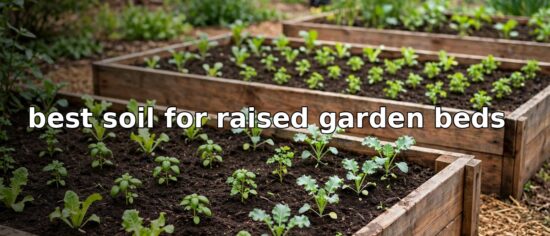
Best soil for raised garden beds is a loose, rich mix that holds moisture without staying soggy: roughly sixty percent topsoil, thirty percent compost and ten percent drainage material. Fill the bed with that mix, water it before planting, and top it up with fresh compost every year.
Key Takeaways
- The best raised bed mix is about 60 percent topsoil, 30 percent compost and 10 percent drainage material.
- Never fill a raised bed with plain garden soil, which compacts and drains badly.
- Loose soil matters more than rich soil: roots need air as well as food.
- Top up every bed with 5 cm of compost each spring.
- Water the mix before planting, so it settles and shows its true level.
Why Is Raised Bed Soil Different?
A raised bed is a box of soil with no connection to the ground below, so it cannot borrow moisture or nutrients from the earth the way an in-ground bed can. The soil inside has to do everything: hold water, drain the excess, feed the plants and stay loose enough for roots.
Plain garden soil fails in a raised bed: usually heavy clay or thin sand, it compacts in a box into a solid block that drowns roots after rain and bakes hard in summer. Bought topsoil alone is better, but it still lacks organic matter. For wider garden ideas, decoration tips decoradhouse is a useful place to start.
The answer is a mix, not a single product: topsoil gives the bed its body, compost feeds it, and a drainage material keeps it open. Mixed together, they behave like good garden earth.
What Is the Best Soil Mix for a Raised Bed?
The classic mix is simple: sixty percent topsoil, thirty percent compost and ten percent drainage material. For a bed one metre by two metres and 30 cm deep, that is about 360 litres of topsoil, 180 of compost and 60 of coarse sand or perlite.
Topsoil should be screened, dark and free of stones and rubbish. Compost should be mature and smell earthy, not sour. The drainage material can be coarse sand, perlite or fine grit; its job is to keep air in the mix so roots can breathe.
Mix the ingredients on a tarp or in a wheelbarrow before they go into the bed, so the compost spreads evenly. A bed filled in layers ends up patchy, and plants in the compost pockets grow differently from plants in the topsoil.
| Ingredient | Share of mix | What it does |
|---|---|---|
| Screened topsoil | 60 percent | Gives the bed body |
| Mature compost | 30 percent | Feeds plants, holds moisture |
| Coarse sand or perlite | 10 percent | Keeps the mix open |
| Well-rotted manure | Swap for compost | Adds nutrients slowly |
How Do You Fill a Raised Bed?
Fill the bed in stages, not all at once. Shovel the mixed soil in, water it lightly, and let it settle for a day before adding more. A bed filled to the top on day one will sink several centimetres within a week.
Leave 3 to 5 cm below the rim, so soil does not wash out when you water and there is room for mulch later.
Water the finished bed before planting, and check the level again the next day. Top up any dips with more mix, so the surface is level. A bed watered and settled before planting gives seedlings a stable home.
What Do Different Plants Need From the Soil?
Most vegetables and flowers are happy in the standard mix, but a few have clear preferences. Leafy greens want rich, moist soil, so add an extra handful of compost to their part of the bed. Root vegetables want loose, stone-free soil, so sieve the mix for their row and add extra sand.
Tomatoes and other hungry feeders want the richest soil in the bed, so give them the compost-heavy end and feed them again mid-season. Herbs such as rosemary and thyme want the opposite: leaner, sharper soil, so add extra grit to their corner and hold back the compost. For more advice on planning what to grow, garden tips decoradhouse is worth a look.
How Do You Keep Raised Bed Soil Healthy?
Raised bed soil gets tired faster than ground soil, because the plants eat through the compost and the mix settles. The fix is a yearly top-up: every spring, spread 5 cm of fresh compost over the surface and fork it into the top 10 cm.
Rotate what you grow: do not plant tomatoes or potatoes in the same bed two years running, because soil-borne problems build up. A simple rotation, roots one year, leaves the next, fruiting crops the year after, keeps the soil healthy. For clever ways to get more from a small garden, garden hacks decoradhouse is worth a look.
Follow these steps each spring:
- Clear the old plants and pull out any weeds by the root.
- Fork the top 10 cm lightly to break up any crust.
- Spread 5 cm of fresh compost over the whole bed.
- Water the bed well and let it settle for a day.
- Plant into the refreshed mix, and mulch around the seedlings.
What Mistakes Should You Avoid?
The biggest mistake is filling a raised bed with plain garden soil. It compacts, drains badly and starves the plants, and fixing it means digging the whole bed out again. Mix a proper blend from the start.
The second mistake is using fresh manure: it burns young roots and can carry weed seeds, so compost it for at least six months first.
The third mistake is forgetting to top up. A bed losing 5 cm of soil a year to settling and harvesting will be half empty in three years, with the plants sitting in a hollow that floods in rain. A yearly compost top-up is the cheapest insurance a raised bed has. For more garden planning ideas, decoradhouse garden tips by decoratoradvice can help you plan the work.
| Mistake | What happens | How to fix it |
|---|---|---|
| Plain garden soil | Compacts, drowns roots | Dig out and refill |
| Fresh manure | Burns roots, brings weeds | Use only well-rotted manure |
| No yearly top-up | Bed sinks, plants sit in a hollow | Add compost every spring |
| No mulch | Soil dries and crusts | Mulch 5 cm around plants |
| Same crop every year | Soil problems build up | Rotate crops each season |
What Are the Exceptions and Edge Cases?
- Very deep beds: For beds over 45 cm deep, fill the bottom third with logs, branches or straw, and use the soil mix only in the top two thirds.
- Beds on concrete: add coarse gravel at the bottom for drainage, and check that water can escape after heavy rain.
- Acid-loving plants: Blueberries and similar plants need their own bed with ericaceous compost, not the standard mix.
- Hot, dry climates: add extra compost and a thicker mulch layer, because raised beds dry out faster than ground beds.
- Small beds on balconies: use the same mix in a lighter form, with extra perlite instead of sand, so the bed is not too heavy.
Frequently Asked Questions
What is the best soil mix for raised garden beds?
About 60 percent screened topsoil, 30 percent mature compost and 10 percent coarse sand or perlite, mixed before filling.
Can I use plain garden soil in a raised bed?
No. Garden soil compacts in a box, drains badly and starves plants. A proper mix works far better.
How much soil do I need for a raised bed?
Multiply length by width by depth: a bed 2 metres by 1 metre and 30 cm deep needs about 600 litres.
Should I put anything at the bottom of a raised bed?
On soil, nothing is needed. On concrete or paving, add coarse gravel for drainage. For very deep beds, logs and branches can fill the bottom third.
How often should I top up raised bed soil?
Every spring, add 5 cm of fresh compost and fork it into the top 10 cm. The soil settles and loses nutrients each year.
Can I reuse raised bed soil year after year?
Yes, if you top it up with compost each spring and rotate your crops. The soil improves as organic matter builds up.
Conclusion
The best raised bed soil is not a single product but a mix: sixty percent topsoil for body, thirty percent compost for food and moisture, and ten percent drainage material to keep it open. Fill the bed in stages, water it before planting, top it up with compost every spring, and rotate your crops. With that mix, the best soil for raised garden beds will give your vegetables and flowers the healthy, loose home they need to grow well.