
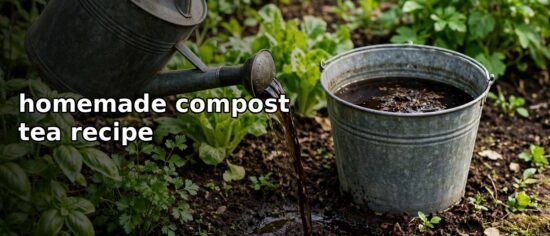
A homemade compost tea recipe turns finished compost into a liquid feed by soaking or aerating it in water, then diluting it before application to soil or leaves. Use only mature compost, brew for the right time, and dilute before use so plants get gentle nutrition without stress.
Key Takeaways
- Compost tea is diluted liquid from finished compost, not a replacement for compost itself.
- Brewed tea uses air and a pump, while non-brewed tea is a simple soak.
- Start only with mature, earthy-smelling compost, never fresh manure.
- Dilute finished tea before use, and apply it in cool, calm weather.
- Use it as a gentle, regular supplement alongside good soil care.
What Is Compost Tea?
Compost tea is water that has taken up nutrients and tiny living organisms from compost. Gardeners use it to give soil life and plants a light, fast-acting boost. It does not replace mulching, composting, or balanced soil care, since its strength varies with the compost used.
One bucket can reach many plants, while the same compost spread dry would cover only a small bed. For broader home and garden care, see these decoration tips decoradhouse.
What Is the Difference Between Brewed and Non-Brewed Compost Tea?
The main difference is air. Brewed tea uses an aquarium pump and air stone to push oxygen through the mixture, encouraging helpful aerobic microbes. Non-brewed tea simply steeps compost in water without a pump, so it should be stirred well and used sooner.
Brewed tea should smell fresh and earthy when ready, and its pump must run without long breaks. Non-brewed tea needs no electricity, but still water can lose oxygen over time, so prompt use matters.
| Method | How It Works | Brewing Time | Best For |
|---|---|---|---|
| Brewed compost tea | Pump and air stone keep oxygen moving | 24 to 36 hours | A lively, aerated brew |
| Non-brewed compost tea | Compost steeps in still water, stirred by hand | 24 to 48 hours | Simple feeding with no equipment |
Choose brewed tea if you have a pump; choose non-brewed tea for a quick, low-cost method. Both need finished compost, clean equipment, and prompt use.
What Ingredients Do You Need for Compost Tea?
You need a clean bucket, finished compost, and chlorine-free water. Rainwater works well. If you use tap water, leave it uncovered for about a day so chlorine can escape, or use filtered water. Avoid softened water, and never use water you would not trust on garden soil.
For brewed tea, add an aquarium air pump, tubing, and an air stone. A mesh bag, paint strainer bag, or old pillowcase holds the compost and keeps solids out. This matters most for sprayers, which can clog if particles get through.
Molasses is optional for brewed tea: one tablespoon per four litres is enough, and skip it if compost is already rich. Do not add fresh manure, meat, dairy, or kitchen waste.
How Do You Make Brewed Compost Tea Step by Step?
This method makes about 20 litres, enough for several beds or a small garden.
- Fill a clean bucket with 20 litres of chlorine-free water and place it in shade.
- Put about four litres of finished compost into a mesh bag and tie the top loosely.
- Lower the bag into the water, with the air stone near the bottom.
- Switch on the pump and check that bubbles move steadily through the water.
- If using molasses, stir in about five tablespoons until dissolved.
- Brew for 24 to 36 hours, keeping the pump running and the bucket out of direct sun.
- Remove the bag, strain the liquid if needed, and dilute it before use.
Finished tea should smell earthy, like damp soil after rain. If it smells sour or like rotten eggs, discard it, clean the bucket, and start again. Do not over-brew.
How Do You Dilute and Apply Compost Tea?
Dilution protects plants and spreads the tea further. Undiluted tea can be too strong for young leaves and seedlings. As a general guide, dilute one part tea with four parts water for soil application, and one part tea with ten parts water for foliar spraying. Use an even lighter mix for seedlings, containers, and tender growth.
Soil drenching is the simplest and safest method. Pour diluted tea slowly around the base of plants so it soaks into the root zone. Foliar spraying coats leaves with a fine mist and is best early in the morning or evening, when the sun is low.
Use a clean watering can for drenches and a clean, well-strained sprayer for foliar feeds. Apply in calm weather, not just before heavy rain. For most gardens, every two to four weeks in the growing season is enough.
| Application Method | Dilution Guide | When to Use | Notes |
|---|---|---|---|
| Soil drench | 1 part tea to 4 parts water | Morning or evening, on moist soil | Best for roots and new plantings |
| Foliar spray | 1 part tea to 10 parts water | Early morning or evening, calm weather | Strain well, coat leaves lightly |
What Safety Rules Should You Follow?
Safety starts with the compost. Use only finished, earthy-smelling, crumbly compost with no recognisable food waste or manure smell. Never use fresh manure, unfinished compost, or compost that smells sour or like ammonia.
Keep equipment clean: wash buckets, bags, air stones, and sprayers after each batch and let them dry. Wear gloves, wash your hands after use, and avoid splashing tea onto your face.
Do not spray tea on leafy vegetables or herbs close to harvest, and wash all produce well before eating. For edible crops, soil drenching is safer. Take extra care around ready-to-eat crops if anyone in the household has a weakened immune system.
What Are the Exceptions and Edge Cases?
Compost tea is not right for every situation. Seedlings and young transplants need a much weaker mix, or plain water until roots settle, and newly sown seeds should not be soaked in strong tea.
Lawns, roses, and heavy feeders such as tomatoes often respond well, but plants that prefer poor soil, including many herbs, may not need extra feeding. Regular tea can push soft growth and reduce flavour or flowering, so use it rarely for them, or rely on compost mulch.
Cold weather is another edge case: microbes are less active in cold soil, so wait for spring warmth rather than applying in winter. Do not add liquid to waterlogged soil, and do not spray diseased plants hoping tea alone will cure them.
Results also vary with compost quality, so if a batch disappoints, check the compost, water, and brewing time first. A garden tips decoradhouse routine built around observation serves you better than chasing a perfect formula.
Frequently Asked Questions
Can I use compost tea on all garden plants?
Most plants tolerate diluted compost tea, but seedlings and poor-soil plants need a weaker mix. Test a small area first, and avoid spraying leafy vegetables close to harvest.
Is brewed or non-brewed compost tea better?
Brewed tea is more active because aeration supports oxygen-loving microbes, while non-brewed tea is simpler and needs no pump. Choose the method that fits your equipment and timing.
Can I store leftover compost tea?
Use it fresh, within a few hours of brewing. Stored tea loses oxygen quickly and can turn unpleasant, so discard any batch that smells sour.
Does compost tea replace fertiliser?
No, it is a supplement, not a complete fertiliser. It supports soil life and gives a gentle boost, but combine it with compost, mulch, and balanced soil care, as explained in these decoradhouse garden tips by decoratoradvice.
Can I add molasses to every batch?
Molasses is optional, and a small amount is enough for brewed tea. Too much can turn a batch bad, so skip it if your compost is already rich.
What should I do if my compost tea smells bad?
Discard it onto an unused patch of soil, away from edible crops, and clean all equipment. Use fresher compost, improve aeration, and brew a smaller same-day batch, as in these simple garden hacks decoradhouse approaches.
Conclusion
A good routine is simple: start with finished compost, brew with care, dilute before use, and apply gently through the season. Brewed tea is lively and aerated, while non-brewed tea is low-cost and still supports soil and plants. With fresh batches and attention to plant response, this homemade compost tea recipe can become a reliable part of a healthy garden.